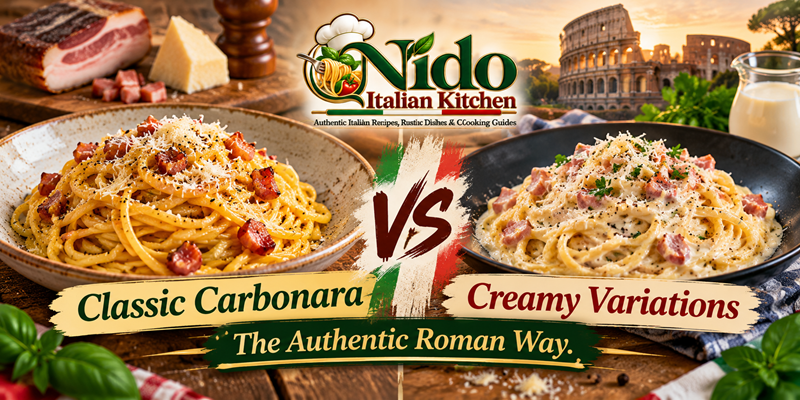
Classic Carbonara vs. Creamy Variations: The Authentic Roman Way – Spaghetti alla Carbonara stands as one of the most iconic culinary gifts from the Lazio region of Italy. Renowned for its rich texture and savory profile, this classic pasta dish has gained global popularity. However, international adaptations have frequently altered its foundational structure by introducing heavy cream, garlic, or green peas.
Classic Carbonara vs. Creamy Variations: The Authentic Roman Way
Understanding the distinction between traditional Roman preparation and modern creamy variations allows home cooks to appreciate the true elegance of Italian gastronomy. This article examines the historical ingredients, emulsion mechanics, and essential cooking techniques that define authentic Carbonara.
The Four Core Pillars of Authentic Carbonara
Traditional Roman Carbonara achieves its luscious, velvet-like consistency without adding a single drop of milk or cream. Instead, the magic relies entirely on a precise culinary emulsion formed by four primary ingredients:
-
Guanciale (Cured Pork Jowl): Unlike standard bacon or pancetta, guanciale features distinct layers of rich fat that render down during slow cooking. This fat provides the primary flavor base and luscious mouthfeel for the entire dish.
-
Pecorino Romano Cheese: Aged hard sheep milk cheese offers a sharp, salty, and pungent profile that balances the richness of the rendered pork fat.
-
Fresh Egg Yolks: Egg yolks act as natural emulsifiers. When combined with warm fat and starchy pasta water, they create a glossy sauce without coagulating.
-
Coarsely Ground Black Pepper: Freshly cracked black pepper cuts through the richness, providing subtle heat and aroma.
Why Cream Is Unnecessary in Traditional Roman Cuisine
The inclusion of heavy cream in modern variations often stems from a desire to simplify the cooking process. Cream acts as a stabilizing agent, preventing eggs from scrambling when exposed to high temperatures. While this shortcut yields a rich sauce, it drastically alters the authentic flavor profile.
Heavy dairy coats the palate and masks the subtle interplay between savory guanciale fat and sharp Pecorino Romano. Furthermore, heavy cream adds unnecessary moisture, resulting in a thick, heavy texture rather than a light, silky coating. In traditional Roman kitchens, achieving creaminess is considered a matter of temperature management and physical emulsion, not dairy addition.
The Science of the Perfect Emulsion
The defining feature of a true Roman Carbonara is its silky sauce, achieved through a process known as starch-fat emulsification. Mastering this technique requires careful control of heat and timing.
1. Rendering the Pork Fat
Guanciale should be sliced into thick strips and cooked slowly over medium-low heat. This gradual rendering process releases the clear aromatic fat while leaving the meat crispy on the outside and tender within.
2. Tempering the Egg Mixture
In a separate bowl, whisk together fresh egg yolks, finely grated Pecorino Romano, and generous amounts of cracked black pepper. The mixture should form a thick, paste-like consistency prior to meeting the hot pasta.
3. The Power of Starchy Water
Pasta water contains dissolved starches released during boiling. Adding a small ladle of warm, starchy water to the rendered fat creates a stable liquid base. When mixed with the egg and cheese paste off the heat, the starch molecules prevent the egg proteins from clumping together into scrambled curds.
Essential Steps to Prepare Authentic Carbonara
Follow this structured method to ensure a smooth, velvety finish without resorting to dairy additives. The Art of Making Fresh Homemade Pasta Without a Machine
-
Boil the Pasta: Cook long pasta shapes like spaghetti or rigatoni in a pot of salted boiling water until just under al dente.
-
Crisp the Guanciale: Gently fry the cured pork strips in a wide skillet until golden. Turn off the flame and transfer the crisp meat to a plate, leaving the liquid fat in the pan.
-
Combine Pasta and Fat: Transfer the cooked pasta directly into the skillet with the slightly cooled rendered fat, tossing gently to coat the strands.
-
Emulsify Off the Flame: Move the skillet entirely away from the stove burner. Pour in the egg and cheese mixture along with a splash of hot pasta cooking liquid.
-
Vigorous Stirring: Stir and toss the pasta rapidly for 60 seconds. The residual heat will cook the egg yolks gently, forming a glossy, creamy coating that clings to every strand.
-
Final Assembly: Fold the crispy guanciale back into the pasta, garnish with extra Pecorino Romano, and serve immediately on warm plates.
Key Differences Between Classic and Creamy Variations
| Element | Authentic Roman Carbonara | Creamy Western Variation |
| Fat Source | Rendered Guanciale fat | Heavy cream, butter, or oil |
| Cheese Base | Aged Pecorino Romano | Pre-shredded Parmesan or processed cheese |
| Thickening Method | Egg yolk and starch emulsion | Reduced dairy solids |
| Texture Profile | Silky, light, and glossy | Thick, heavy, and coating |
| Primary Aromatics | Black pepper and cured pork | Garlic, onions, or herbs |
Conclusion
While creamy pasta variations have their place in casual modern cooking, classic Spaghetti alla Carbonara demonstrates how simple ingredients can achieve extraordinary results through refined technique. By relying on guanciale fat, fresh egg yolks, Pecorino Romano, and starchy pasta water, home cooks can experience the true, authentic flavor of Roman culinary tradition right from their own kitchen.