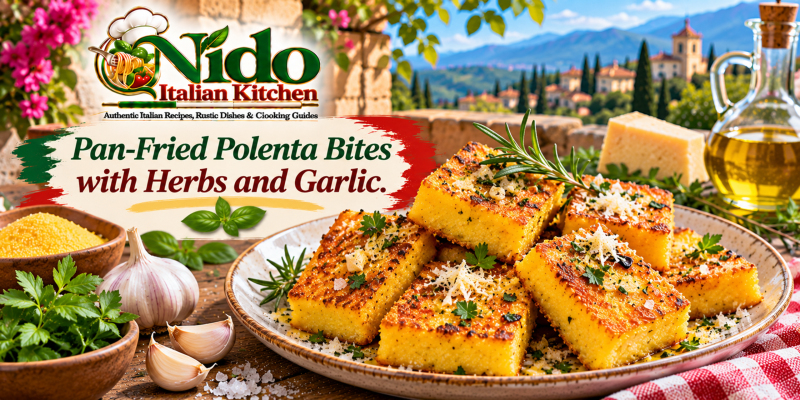
Pan-Fried Polenta Bites with Herbs and Garlic – In the rich culinary tapestry of Northern Italy, polenta has sustained communities for centuries. Originally served as a humble, slow-cooked porridge made from coarse cornmeal, polenta provides a comforting and versatile base for various regional meals. While soft polenta offers warmth during cold months, letting the cooked grain set and frying it creates an entirely new texture.
Pan-Fried Polenta Bites with Herbs and Garlic
Pan-fried polenta bites with herbs and garlic deliver a crisp outer shell alongside a soft, creamy interior. In this educational culinary guide, we will analyze the history, technique, and flavor balancing required to make crispy polenta bites. By following these foundational cooking rules, you can transform simple cornmeal into a sophisticated modern appetizer.
The Historical Evolution of Northern Italian Polenta
Understanding the heritage of polenta explains its enduring importance in Italian domestic cooking. Classic Caprese Salad: Tomatoes, Mozzarella and Fresh Basil
1. Ancient Grains to Yellow Maize
Long before corn arrived in Europe, ancient Romans prepared early versions of polenta using emmer wheat, spelt, and buckwheat. Later in the sixteenth century, Spanish explorers introduced yellow maize from the Americas to Italian agriculture. Farmers in Northern regions like Veneto and Lombardy cultivated maize rapidly due to its high crop yields.
2. From Rustic Sustenance to Modern Dining
Historically, rural families ate soft polenta daily alongside stews, cheeses, and braised meats. When leftovers cooled, home cooks sliced the firm cornmeal and seared it over hot embers to prevent food waste. Today, modern chefs elevate pan-fried polenta bites into popular small-plate appetizers across global Italian restaurants.
Core Ingredients for Flavorful Polenta Bites
Creating memorable polenta bites requires seasoning the cornmeal thoroughly during the initial boiling phase.
1. Coarse Yellow Cornmeal (Polenta Grani)
Always select coarsely ground yellow cornmeal or traditional Italian polenta grain. Fine corn flour creates a pasty texture, whereas coarse grains provide a pleasant, toothsome bite after cooking.
2. Rich Simmering Liquid and Aromatics
Boiling cornmeal in plain water often yields bland results. Instead, use a mix of rich vegetable broth and whole milk to infuse flavor naturally. Additionally, stir in minced fresh garlic, finely chopped rosemary, and fresh thyme while the porridge thickens.
3. Cheese and Butter Finish
Once the polenta finishes simmering, fold in unsalted butter and finely grated Parmigiano-Reggiano cheese. The cheese adds a salty, savory depth while butter enhances the creamy internal mouthfeel.
Step-by-Step Technique for Crispy Polenta Bites
Achieving maximum crispness requires a two-step process: cooking the soft cornmeal and chilling it thoroughly before frying.
Phase 1: Slow Cooking the Porridge
Bring your seasoned broth and milk mixture to a gentle boil in a heavy saucepan. Slowly rain the coarse cornmeal into the liquid while whisking continuously to prevent lumps from forming. Reduce the flame to low and cook the mixture for roughly thirty minutes, stirring frequently until the polenta pulls away cleanly from the sides of your pot.
Phase 2: Setting and Chilling
Pour the warm, thick polenta directly into a shallow baking dish lined with parchment paper. Smooth the top surface evenly using an offset spatula to achieve a uniform thickness of half an inch. Transfer the dish to the refrigerator and chill for at least two hours until the cornmeal sets into a firm, sliceable block.
Phase 3: Precision Cutting
Once the polenta block becomes solid, lift it out of the baking tray. Slice the firm slab into uniform square or rectangular bites using a sharp knife edge. Wipe your knife blade between cuts to ensure clean, sharp geometric edges.
Phase 4: Pan-Frying to Golden Perfection
Heat extra virgin olive oil and crushed garlic cloves inside a skillet over medium-high heat. Add your polenta squares in a single layer, ensuring they do not touch each other. Pan-fry the bites for roughly four to five minutes per side until a deep golden, crunchy crust develops.
Key Rules for Pan-Frying Success
-
Complete Chilling: Never fry warm polenta, as high moisture levels will cause the squares to break apart in hot oil.
-
Oil Heat Control: Maintain a medium-high pan temperature so the exterior crisps rapidly without absorbing excessive oil.
-
Minimal Turning: Allow each side to form a solid crust before flipping to prevent sticking.
-
Immediate Seasoning: Sprinkle coarse sea salt over hot polenta bites right after lifting them from the skillet.
Summary Comparison of Polenta Preparation Styles
| Feature | Soft Creamy Polenta | Pan-Fried Polenta Bites |
| Serving Context | Main course base or winter side dish | Interactive appetizer or shared party platter |
| Preparation Phase | Served immediately straight from the pot | Chilled completely and sliced into geometric shapes |
| Exterior Texture | Smooth, thick, and porridge-like | Deeply crisp, golden, and crunchy |
| Flavor Accents | Rich gravies, braised meats, and stews | Minced garlic, pan-fried herbs, and sea salt |
Conclusion
Pan-fried polenta bites with herbs and garlic represent a brilliant bridge between rustic Italian history and modern appetizer culture. By simmering coarse cornmeal with fresh herbs, cooling the mixture into firm shapes, and searing the squares until golden, you achieve a delightful texture contrast. Serve these crispy bites alongside warm marinara sauce or creamy Gorgonzola dip to offer guests a memorable taste of Northern Italian cooking tradition.