
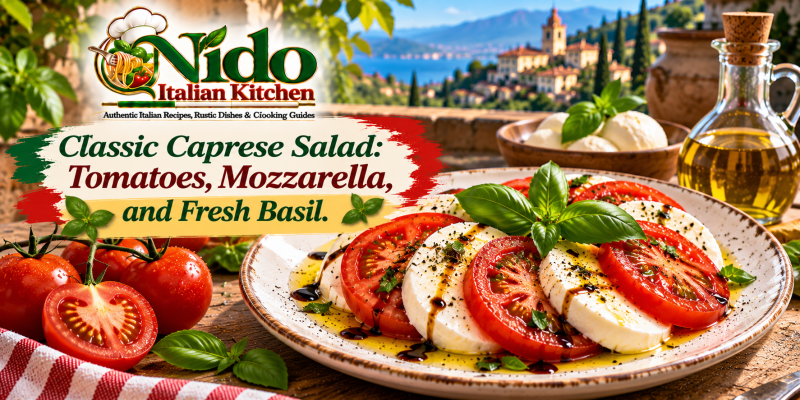
Classic Caprese Salad: Tomatoes, Mozzarella and Fresh Basil – In the vibrant spectrum of traditional Italian cooking, few dishes capture the essence of summer quite like the classic Caprese salad (Insalata Caprese). Hailing from the picturesque island of Capri, this iconic appetizer relies on a modest trio of fresh raw ingredients. Rather than overwhelming the palate with complex dressings, a true Caprese celebrates natural simplicity.
Classic Caprese Salad: Tomatoes, Mozzarella and Fresh Basil
Because the recipe features no heavy cooking, selecting high-quality produce remains the absolute key to success. In this educational guide, we will analyze the history, ingredient chemistry, and arrangement methods for classic Caprese salad. By mastering these foundational culinary rules, you can create a refreshing, restaurant-quality appetizer at home.
The Historic Origins of Capri’s Iconic Dish
Understanding the historical background of Caprese salad reveals how regional Italian traditions honor local ingredients and national pride. Crispy Arancini and Modern Food Sharing Culture
1. Patriotic Colors of the Italian Flag
Historical accounts suggest that Caprese salad emerged during the early 1920s on the island of Capri. Local cooks assembled the dish intentionally to honor the Italian national flag. The bright red tomatoes, crisp white mozzarella, and vibrant green basil leaves create a visual tribute to the nation’s heritage.
2. A Light Post-War Creation
Later in the 1950s, the salad gained global fame when King Farouk of Egypt visited Capri. Seeking a light, refreshing afternoon meal during hot summer days, he fell in love with the simple combination. Subsequently, luxury hotels across Europe added Caprese salad to their summer menus, establishing its status as a timeless classic.
The Three Fundamental Ingredient Pillars
Because Caprese salad uses zero cooked elements, every single component must offer peak freshness and superior texture.
1. Ripe Vine-Ripened Tomatoes
Always select fresh, vine-ripened tomatoes that feel firm yet yield slightly to gentle pressure. Heirloom varieties, beefsteak tomatoes, or mature San Marzano tomatoes provide a sweet, low-acidity base. Furthermore, keep tomatoes at room temperature before slicing, as cold refrigeration destroys their natural aromatic compounds.
2. Authentic Fresh Mozzarella
The cheese selection dictates the creamy mouthfeel of your assembled salad.
-
Mozzarella di Bufala DOP: Crafted from water buffalo milk in the Campania region, this cheese offers a rich, tangy, and luxurious liquid center.
-
Fior di Latte: Made from fresh cow milk, offering a milder taste and firm texture that slices cleanly.
3. Fresh Sweet Basil Leaves
Use freshly picked sweet Italian basil leaves instead of dried herbs. Sweet basil supplies an aromatic, slightly peppery scent that balances rich cheese and sweet tomatoes perfectly.
Technical Assembly and Plating Rules
Assembling a Caprese salad requires artistic balance, proper seasoning, and immediate service.
Step 1: Precision Slicing
Slice your ripe tomatoes and fresh mozzarella into uniform rounds roughly one-quarter of an inch thick. Slicing both components to equal thickness ensures a consistent ratio of cheese to tomato in every bite.
Step 2: Overlapping Layer Pattern
Arrange the tomato slices and mozzarella rounds in an alternating, overlapping circular pattern across a wide ceramic platter. Tuck fresh whole basil leaves gently between each slice so the vibrant green color pops against the white and red background.
Step 3: Minimalist Seasoning
Scatter fine sea salt and freshly cracked black pepper over the assembled platter just before serving. Salt draws out natural tomato juices, creating a delicious natural dressing on the plate.
Step 4: Finishing Oil Drizzle
Finish the salad with a generous drizzle of cold-pressed extra virgin olive oil. Traditional Neapolitan recipes exclude vinegar completely. However, a light splash of aged balsamic vinegar can add a pleasant sweet acidity if desired.
Key Rules for Caprese Success
-
Room Temperature Serving: Serve all ingredients at room temperature to maximize natural flavors.
-
Drain Cheese Liquid: Pat fresh mozzarella slices lightly with paper towels to prevent excess water from pooling.
-
No Pre-Cooked Sauces: Avoid heavy bottled dressings that mask the fresh taste of raw produce.
-
Fresh Basil Only: Always tear basil leaves by hand right before serving to avoid bruising the delicate greenery.
Summary Ingredient Comparison
| Component | Traditional Authentic Choice | Low-Quality Alternative |
| Tomato Base | Vine-ripened heirloom or beefsteak | Underripe, refrigerated commercial tomatoes |
| Cheese Base | Mozzarella di Bufala DOP or Fior di Latte | Processed, low-moisture block mozzarella |
| Herb Base | Fresh hand-torn sweet basil leaves | Dried basil flakes or pre-ground herbs |
| Dressing Oil | Cold-pressed extra virgin olive oil | Refined vegetable oil or cheap salad dressings |
Conclusion
Mastering the classic Caprese salad relies on respecting simple ingredients and thoughtful presentation. By combining sweet vine-ripened tomatoes, creamy fresh mozzarella, aromatic basil, and high-grade extra virgin olive oil, you create a harmonious summer dish. Apply these simple sourcing and plating rules in your home kitchen to enjoy an authentic taste of Capri’s culinary heritage.