
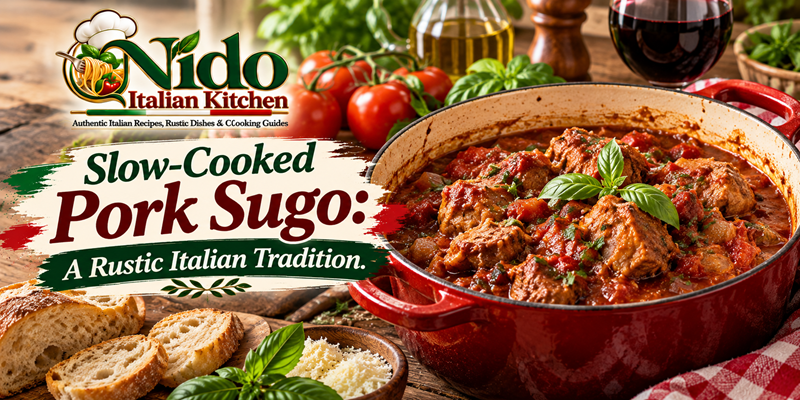
Slow-Cooked Pork Sugo: A Rustic Italian Tradition – In the heart of traditional Italian home cooking lies the comforting art of slow braising. Among the most cherished rustic sauces, slow-cooked pork sugo stands out as a brilliant celebration of patience, simple ingredients, and deep flavor extraction. Unlike quick pan sauces, a authentic sugo transforms humble cuts of meat into a savory, velvety coating for fresh pasta.
Slow-Cooked Pork Sugo: A Rustic Italian Tradition
In this educational culinary guide, we will explore the history, ingredients, and techniques behind traditional pork sugo. By understanding these time-tested principles, you can easily replicate this comforting Italian classic in your domestic kitchen.
Understanding the Heritage of Italian Sugo
The word sugo translates simply to “sauce” or “juice” in Italian. Historically, rural families prepared sugo using affordable, tougher cuts of meat that required long cooking times to become tender.
1. The Art of Gentle Braising
Traditional Italian home cooks understood that tough muscle fibers contain abundant collagen. By simmering these cuts gently over low heat for several hours, collagen converts into smooth gelatin. Consequently, this natural process thickens the sauce without needing commercial starches or heavy cream.
2. A Symbol of Sunday Family Feasts
In many Italian households, preparing a rich meat sugo remains a cherished weekend ritual. Families begin simmering the sauce early in the morning, allowing rich aromas to fill the home for hours. As a result, the completed dish represents family togetherness and culinary heritage.
Core Ingredients for Authentic Pork Sugo
Achieving deep, complex flavors requires selecting high-quality base ingredients that complement each other during slow cooking.
1. The Pork Cut: Pork Shoulder or Butt
Choosing the correct cut of meat dictates the final rich texture of your sauce. For example, pork shoulder or Boston butt contains an ideal balance of lean muscle and marbling. As the meat simmers, the melting fat keeps the pork moist while enriching the tomato base. Essential Pasta Shapes and Their Best Sauce Pairings
2. The Soffritto Foundation
Every classic Italian sugo begins with a traditional soffritto. This foundational base consists of finely diced onions, carrots, and celery cooked gently in extra virgin olive oil. The aromatic vegetables release natural sugars that balance the acidity of tomatoes later in the cooking process.
3. Tomatoes, Wine, and Herbs
High-quality canned plum tomatoes, such as San Marzano, provide a sweet tomato base. Additionally, a splash of dry red or white wine helps deglaze the pan, adding depth and acidity. Finally, fresh bay leaves, rosemary, and thyme infuse subtle herbal notes throughout the braise.
Step-by-Step Cooking Technique
Preparing a rustic pork sugo requires simple preparation followed by patient, low-heat simmering.
Phase 1: Searing the Pork
Season large chunks of pork shoulder generously with sea salt and cracked black pepper. Heat extra virgin olive oil in a heavy Dutch oven over medium-high flame. Sear the meat pieces thoroughly on all sides until a deep brown crust forms. Searing locks in flavor and creates rich browned bits at the bottom of your pot.
Phase 2: Building the Aromatics
Remove the seared pork and set it aside on a plate. Lower the heat and add your finely diced soffritto vegetables directly into the remaining pork fat. Sauté the mixture slowly until the vegetables become soft and translucent. Next, pour in dry wine to deglaze the pan, scraping up all the savory browned bits from the bottom.
Phase 3: The Slow Simmer
Return the seared pork to the pot along with crushed tomatoes and fresh herbs. Cover the Dutch oven loosely and reduce the heat to a gentle simmer. Allow the sauce to cook undisturbed for roughly two to three hours. The pork is ready when it breaks apart effortlessly under gentle pressure from a fork.
Phase 4: Shredding and Sauce Assembly
Transfer the tender pork pieces to a cutting board and shred the meat using two forks. Discard any herb stems, then return the shredded meat directly back into the tomato liquid. Stir the mixture well and let it simmer uncovered for fifteen additional minutes to allow the sauce to thicken.
Ideal Pasta Pairings for Pork Sugo
Because pork sugo possesses a rich, heavy texture, it requires wide pasta shapes that can hold chunky meat sauces effectively.
-
Pappardelle: Wide, flat ribbon noodles provide a broad surface area that holds large pieces of shredded pork easily.
-
Rigatoni: Large ridged tubes trap the rich tomato sauce both inside their hollow centers and along their outer grooves.
-
Gnocchi: Soft potato dumplings soak up the savory sugo juices, creating a hearty and comforting dish.
Key Rules for Cooking Pork Sugo
-
Meat Selection: Use marbled pork shoulder to ensure tender meat and rich flavor.
-
Searing Step: Brown the meat deeply before braising to develop complex savory notes.
-
Simmering Heat: Keep the burner at a low simmer to break down tough fibers gently.
-
Pasta Choice: Serve sugo over wide ribbons or ridged tubes for optimal sauce retention.
Conclusion
Mastering a rustic, slow-cooked pork sugo requires time, but the savory results are well worth the wait. By honoring quality ingredients, building a proper soffritto base, and braising the meat gently, you can create a truly authentic Italian comfort dish. Serve your homemade sugo over fresh pappardelle to experience the true warmth of Italian culinary tradition.