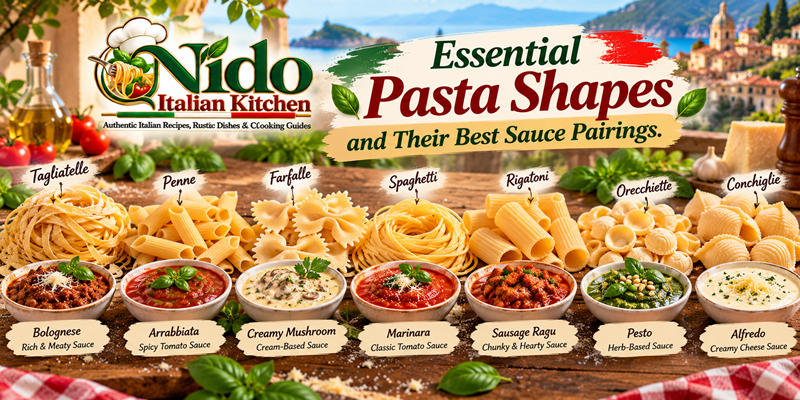
Essential Pasta Shapes and Their Best Sauce Pairings – In Italian culinary culture, matching a specific pasta shape with its ideal sauce is far from accidental. In fact, traditional Italian cooks consider shape selection a fundamental science. The surface geometry, width, and physical design of each noodle govern how well it captures and holds different sauce consistencies.
Essential Pasta Shapes and Their Best Sauce Pairings
Consequently, pairing the wrong pasta format with a sauce can diminish the entire dining experience. In this educational guide, we will explore the structural logic behind essential pasta shapes and their best sauce pairings. By mastering these foundational principles, you can elevate your homemade Italian dishes to restaurant standards.
Long and Slender Pasta Shapes
Long pasta noodles vary significantly in width, thickness, and surface area. As a result, each long shape interacts uniquely with oil bases and emulsified sauces.
1. Thin Strands: Spaghetti and Capellini
Delicate, thin strands like Spaghetti or Capellini demand light, fluid sauces. For example, smooth oil-based dressings, light tomato sauces, or traditional garlic and olive oil (Aglio e Olio) coat thin noodles evenly without weighing them down. On the other hand, heavy meat ragùs will slide off thin strands, leaving the meat at the bottom of your bowl.
2. Wide Ribbons: Tagliatelle and Pappardelle
Unlike thin strands, flat ribbon pastas provide a broad surface area. Wide noodles like Tagliatelle, Fettuccine, and Pappardelle hold robust, hearty toppings effortlessly. Therefore, wide ribbons pair exceptionally well with rich slow-cooked meat ragùs, creamy Alfredo sauces, and wild mushroom reductions.
Short and Tubular Pasta Formats
Short tubular pasta shapes feature interior hollows and exterior ridges that trap chunkier ingredients easily.
1. Ridged Tubes: Penne Rigate and Rigatoni
Tubular shapes like Penne and Rigatoni feature open ends and exterior grooves (rigate). Consequently, these structural features pull rich sauces directly inside the tube. Thick vegetable sauces, spicy tomato arrabbiata, and chunky meat coatings work exceptionally well with ridged tubes.
2. Curved Tubes: Elbouws and Pipe Rigate
Curved tubular shapes trap dense liquid sauces inside their bent pockets. As a result, they work perfectly with rich cheese sauces, baked pasta dishes, and thick vegetable creams.
Twist and Shaped Pastas
Twisted pasta shapes act like miniature sponges, capturing fine particles within their tight spirals and folds.
1. Spirals: Fusilli and Rotini
The tight corkscrew design of Fusilli catches smooth, finely blended sauces effortlessly. For instance, classic basil pesto, herb purees, and smooth vegetable sauces cling tightly to every spiral groove. Mastering Gnocchi: Tips for Soft and Light Potato Pillows
2. Bowties and Shells: Farfalle and Conchiglie
Conchiglie (shells) feature deep inner cavities that scoop up small, chunky pieces like peas, minced sausage, and diced vegetables. Similarly, Farfalle (bowties) hold light cream or vegetable sauces within their folded central pinch.
Essential Pairing Rules at a Glance
-
Thin Strands (Spaghetti): Pair with light tomato, seafood, or olive oil bases.
-
Broad Ribbons (Pappardelle): Combine with rich beef, wild boar, or cream sauces.
-
Ridged Tubes (Rigatoni): Match with chunky meat ragùs, baked dishes, or thick sauces.
-
Spirals (Fusilli): Use alongside smooth pesto, herb creams, or light vegetable purées.
-
Deep Shells (Conchiglie): Fill with small vegetable dice, sausage bits, or thick creams.
Summary of Sauce and Shape Mechanics
| Pasta Category | Physical Features | Recommended Sauce Type |
| Thin Strands | Smooth, narrow surface | Oil bases, light tomato, seafood |
| Wide Ribbons | Broad, flat surface area | Heavy meat ragùs, cream, mushrooms |
| Tubular Shapes | Hollow centers, ridged walls | Chunky vegetable or meat sauces |
| Twisted Spirals | Tight spiral grooves | Smooth pesto, finely chopped dressings |
Conclusion
Understanding essential pasta shapes and their best sauce pairings transforms daily cooking into an authentic Italian art form. By matching noodle geometry with the proper sauce weight, you ensure that every bite delivers a balanced distribution of flavor and texture. Apply these time-tested pairing rules in your kitchen to enjoy truly harmonious Italian pasta dishes.