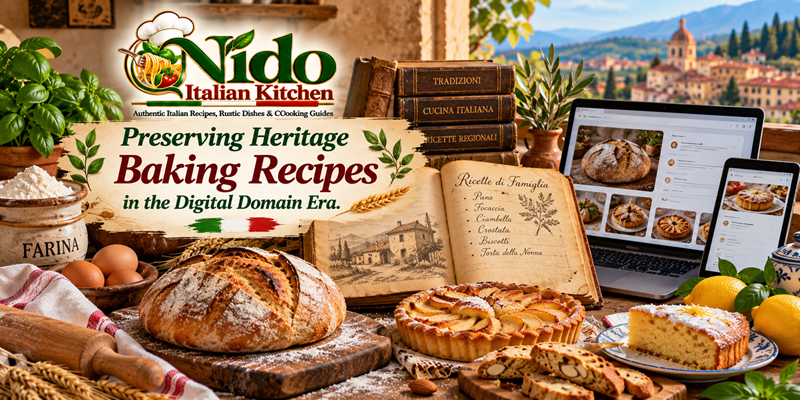
Preserving Heritage Baking Recipes in the Digital Domain Era – Baking traditions represent a vital component of global culinary heritage. For centuries, artisanal bakeries and family kitchens passed down complex baking formulas through spoken instruction or handwritten notebooks. However, rapid urbanization and changing lifestyle habits threaten many regional baking methods with extinction.
Preserving Heritage Baking Recipes in the Digital Domain Era
Fortunately, modern technology offers unprecedented opportunities to safeguard these ancient techniques through systematic digital preservation. In this educational article, we will examine how digital platforms protect historical baking knowledge. By understanding digital archiving methods, we can ensure that centuries-old baking wisdom remains accessible for future generations.
The Threat to Traditional Baking Wisdom
Traditional baking relies heavily on subtle sensory cues rather than rigid mechanical measurements. Consequently, preserving these living traditions presents unique challenges in our fast-paced modern world.
1. The Loss of Oral Traditions
Historically, master bakers taught apprentices through years of hands-on practice. Apprentices learned to assess dough fermentation by feeling its elasticity, smelling its acidity, and observing air bubble development. As younger generations choose alternative career paths, fewer people learn these delicate artisanal skills directly. Therefore, traditional baking knowledge risks disappearing when senior bakers retire.
2. Physical Decay of Historical Records
Many historic family bakeries recorded their unique formulas in handwritten journals. Unfortunately, paper records degrade over time due to age, moisture, and kitchen wear. Without digital backups, fires or natural disasters can destroy irreplaceable culinary history instantly.
How Digital Platforms Protect Culinary Heritage
Digital technology transforms how historians and culinary enthusiasts document, store, and share traditional baking recipes worldwide.
1. Standardizing Baker’s Percentages
Traditional recipes often used vague measurements like pinches or handfuls. Today, digital archivists convert historical baking formulas into precise baker’s percentages using metric weight ratios. As a result, bakers anywhere in the world can replicate complex sourdough formulas accurately regardless of batch size.
2. High-Definition Video Archiving
While written text explains flour ratios effectively, video recordings capture physical movement and dough texture seamlessly. Digital repositories now host detailed video guides showing ancient sourdough kneading techniques, wood-fired oven management, and manual dough shaping. Consequently, aspiring bakers can study authentic artisanal methods online anytime.
3. Global Communities and Knowledge Sharing
Digital domains enable passionate bakers across different continents to collaborate and exchange historic baking data easily. Online forums and digital databases allow researchers to cross-reference regional sourdough starter strains, ancient grain varieties, and historic oven designs. This global connectivity keeps historical baking traditions alive and dynamic.
Essential Steps for Digitizing Heritage Recipes
Preserving traditional baking formulas requires a systematic approach to capture both technical metrics and historical context accurately.
Phase 1: Gathering Historical Context
Documenting a heritage recipe begins with recording its origin, cultural significance, and traditional baking setting. Knowing the historical grain varieties or local water chemistry helps bakers understand why a specific dough formula evolved over time.
Phase 2: Converting Measurements to Metric Weights
Next, weigh every ingredient using precise digital scales during live baking demonstrations. Convert older volume units into exact gram weights. Furthermore, record ambient room temperatures and dough water temperatures, as thermal control directly influences fermentation speed.
Phase 3: Documenting Biological Parameters
Sourdough and long-fermentation baking rely on wild yeast cultures and beneficial bacteria. Digital archivists now log fermentation times, dough pH levels, and ideal hydration percentages. This technical data helps modern bakers reproduce authentic crust textures consistently.
Phase 4: Publishing on Digital Domains
Finally, publish the standardized recipe, step-by-step imagery, and technical notes on dedicated digital web properties. Using clear categories and structural metadata ensures that search engines index these historical records properly, making them easy for public researchers to find.
Core Advantages of Digital Preservation
-
Global Accessibility: Digital records allow bakers worldwide to study rare regional baking techniques easily.
-
Structural Precision: Metric conversions eliminate measurement confusion, ensuring consistent baking results.
-
Permanent Backups: Cloud storage protects historic baking formulas from physical damage or accidental loss.
-
Interactive Learning: Video documentation captures subtle physical dough handling methods that text alone cannot convey.
Summary of Traditional vs. Digital Archiving
| Feature | Traditional Paper Records | Digital Domain Archiving |
| Durability | Vulnerable to physical wear and fire | Permanently preserved with cloud backups |
| Measurement Style | Imprecise volume units or visual estimates | Exact metric weights and baker’s percentages |
| Reach | Limited to immediate family or local bakery | Accessible globally to researchers and bakers |
| Format | Written text and basic sketches | High-definition video, audio, and detailed text |
Conclusion
Preserving heritage baking recipes in the digital domain era bridges the gap between historical craftsmanship and modern technology. By converting fragile handwritten notes into precise, accessible digital archives in MPO8899 SLOT GACOR, we protect irreplaceable culinary wisdom from disappearing. Digital platforms ensure that the art of traditional sourdough fermentation and artisanal baking continues to inspire home cooks and professional bakers around the globe.