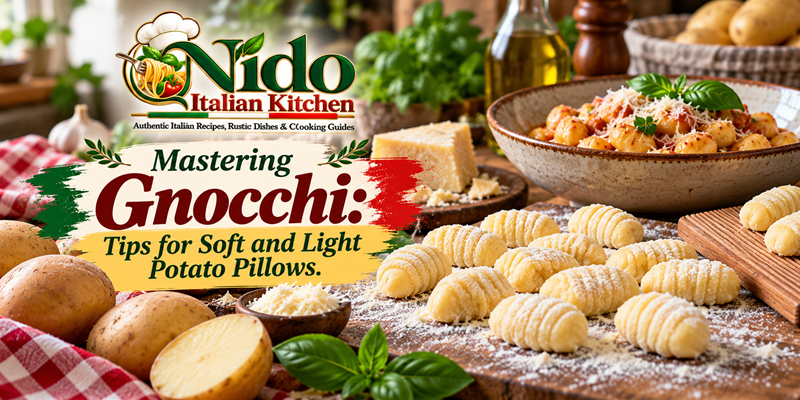
Mastering Gnocchi: Tips for Soft and Light Potato Pillows – Handmade potato gnocchi remain a beloved centerpiece of regional Italian cooking. When executed properly, these tiny potato dumplings deliver a tender, cloud-like texture. On the other hand, inexperienced home cooks often encounter heavy, sticky, or rubbery outcomes.
Mastering Gnocchi: Tips for Soft and Light Potato Pillows
Achieving the ideal consistency demands precise moisture control, accurate starch selection, and delicate physical handling. In this practical culinary guide, we will examine the fundamental steps to perfect your homemade gnocchi. By adopting these proven kitchen principles, you can effortlessly prepare airy, restaurant-quality potato dumplings for your family.
Selecting the Best Potato Varieties
Your journey toward tender gnocchi begins before any preparation starts. In fact, picking the correct potato type directly governs your finished dough structure.
1. High-Starch Dry Potatoes
Always choose dry, floury potato options instead of waxy varieties. For instance, classic Russet potatoes or mature Idaho potatoes serve as outstanding foundations for dumpling dough. These specific roots hold abundant starch solids, which naturally bind your dry mixture together.
2. Avoiding High-Moisture Waxy Roots
In contrast, new potatoes and waxy varieties contain excessive water content alongside lower starch levels. Consequently, they demand large amounts of added wheat flour during mixing. Incorporating too much flour transforms delicate dumplings into tough, chewy dough balls. Therefore, skipping high-moisture potatoes remains vital for protecting lightness.
Eliminating Moisture During Preparation
Excess water poses the greatest threat to fluffy dumpling dough. As a result, removing internal humidity across every preparation step serves as a critical priority.
1. Oven Baking Over Water Boiling
Many older recipe books suggest boiling unpeeled potatoes inside salted water. However, immersion allows liquid to soak through skin cracks, making the inner flesh soggy. Instead, roast whole unpeeled potatoes over a layer of coarse salt inside a hot oven. The dry heat pulls out internal humidity, leaving behind light, floury potato pulp.
2. Ricing While Still Warm
Always push cooked potatoes through a fine metal ricer while they remain warm. A ricer separates the tubers into delicate strands without crushing delicate starch granules. Furthermore, processing warm potatoes allows residual trapped moisture to evaporate quickly into ambient air.
Mixing and Forming the Dough
Building gnocchi dough requires minimal physical effort. Unlike firm egg pasta, potato dough should never undergo prolonged or rough kneading.
1. Keeping Flour Volume Low
As a reliable rule of thumb, use about one cup of flour per pound of riced potatoes. Scatter your flour evenly across the warm potato strands alongside a pinch of fine salt and a single egg yolk. Remember, your main goal involves simply binding the loose particles into one cohesive mass.
2. Handling Ingredients With Care
Kneading builds elastic gluten networks within wheat flour. While gluten strength benefits long noodle strands, it makes potato dumplings dense and heavy. Therefore, combine your dough gently using a flat bench scraper or light hand movements. Stop mixing immediately once a uniform, soft dough ball forms.
Shaping and Boiling Your Dumplings
After your dough comes together, shape your dumplings quickly to prevent the surface from drying out. Celebrating Historic Food Gatherings and Culinary Festivals Across Europe
1. Rolling Out Uniform Ropes
Separate your finished dough into four equal pieces. Gently roll each portion across your board into a long, thin cylinder roughly half an inch wide. Next, slice the dough rope into individual three-quarter-inch pillows using a sharp knife edge.
2. Creating Outer Grooves
Although completely optional, rolling each pillow over a wooden gnocchi board or fork tines creates subtle ridges. These decorative grooves trap pasta sauce effectively while giving your dish a traditional appearance.
3. Gentle Cooking in Salted Water
Drop your finished dumplings into a large pot of boiling, salted water. Cook small batches at a time so the water temperature stays hot. Because fresh gnocchi cook fast, they will float to the surface within two minutes. Once they rise, let them simmer for thirty extra seconds before lifting them out with a slotted spoon.
Summary of Core Gnocchi Rules
-
Potato Type: Select dry, high-starch Russet potatoes to guarantee a light base.
-
Moisture Control: Roast tubers in the oven instead of boiling them in water.
-
Flour Ratio: Keep flour amounts minimal to prevent dense, heavy dumplings.
-
Dough Technique: Mix ingredients gently to stop unwanted gluten activation.
-
Boiling Step: Scoop dumplings out promptly thirty seconds after they float.
Conclusion
Creating soft and light potato gnocchi requires care, proper ingredient choices, and a gentle touch. By choosing high-starch potatoes, drying out moisture, and minimizing kneading time, you can permanently eliminate dense dumplings. Apply these authentic methods during your next cooking session to enjoy genuine, delicious Italian gnocchi at home.