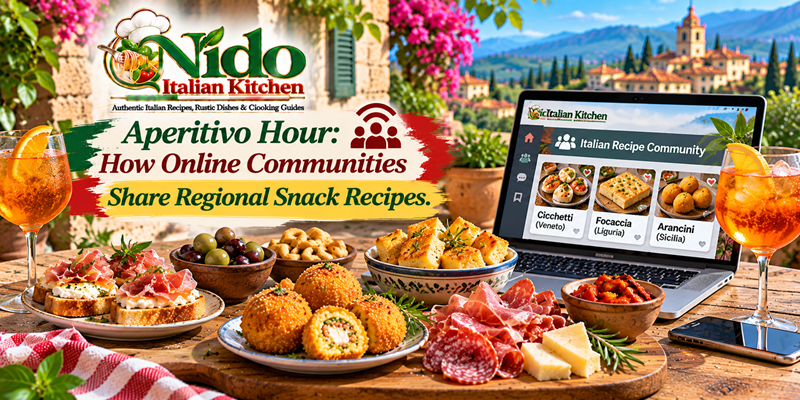
Aperitivo Hour: How Online Communities Share Regional Snack Recipes – In traditional Italian culture, late afternoon marks the welcome transition from work to evening leisure. Known as aperitivo hour, this cherished social ritual combines refreshing beverages with a spread of savory regional snacks (stuzzichini). Historically, local bars and taverns served hyper-regional appetizers that reflected the agricultural produce of their immediate surroundings.
Aperitivo Hour: How Online Communities Share Regional Snack Recipes
Today, digital technology has transformed this intimate tradition into a global phenomenon. Online culinary communities now allow food enthusiasts worldwide to discover, document, and exchange authentic regional snack recipes seamlessly. In this educational article, we will examine how online communities preserve and share regional Italian snack recipes for aperitivo hour. By understanding these digital archiving channels, we can appreciate how modern connectivity keeps centuries-old culinary traditions alive.
The Cultural Significance of Italian Aperitivo Hour
Understanding the historical roots of aperitivo explains why regional snacks hold such a special place in Italian dining tradition.
1. Stimulating the Appetite
The term aperitivo derives from the Latin word aperire, which means “to open.” Originally originating in Northern cities like Turin and Milan, the tradition aimed to open or stimulate the digestive system before dinner. Local taverns served light, bitter beverages alongside small salty snacks to balance the palate.
2. Regional Diversity of Small Bites
Italy features immense regional variation in its aperitivo offerings. For instance, Venetian bars serve cicchetti like marinated sardines on polenta toast. Meanwhile, Apulian establishments offer crunchy taralli breadrings flavored with fennel seeds. In Sicily, vendors serve tiny rice arancini and panelle chickpea fritters. Consequently, each region boasts a unique library of snack recipes tied to local history.
How Online Communities Preserve Regional Culinary Heritage
Digital platforms have created a virtual bridge between small Italian villages and global home cooks. As a result, rare regional snack recipes reach a wider audience than ever before.
1. Crowdsourcing Micro-Regional Recipes
Traditional cookbooks often focus on famous national dishes while overlooking obscure village specialties. In contrast, online culinary forums allow home cooks to share niche family recipes passed down through generations. Digital archives now document specific regional snacks like Ligurian farinata or Tuscan crostini toscani with exact ingredient measurements.
2. Step-by-Step Video Documentation
Preparing traditional small bites often requires specific physical techniques that text alone cannot explain fully. Digital video communities showcase local home cooks shaping dough, stuffing peppers, and frying fritters in high definition. Consequently, aspiring cooks around the globe can learn authentic manual skills directly from native practitioners.
3. Real-Time Ingredient Substitutions
Sourcing hyper-regional Italian ingredients outside Italy can present a challenge for international cooks. Online culinary groups provide active forums where members discuss suitable ingredient alternatives. For example, members share tips on replacing specific regional cheeses with accessible local equivalents without compromising the authentic flavor profile.
Key Categories of Aperitivo Snacks Shared Online
Digital recipe exchanges generally classify traditional Italian aperitivo bites into four distinct structural categories.
-
Crisp Breads and Crackers: Baked items such as Venetian grissini, Sardinian pane carasau, and Apulian taralli offer a long shelf life.
-
Marinated Bites: Acidic items like marinated artichokes, seasoned olives, and pickled peppers cut through rich drinks naturally.
-
Toasted Crostini: Rustic bread slices topped with savory chicken liver pate, whipped salt cod (baccalà mantecato), or roasted vegetables.
-
Fried Delicacies: Warm finger foods such as mini arancini, fried polenta cubes, and cheese-stuffed squash blossoms.
Core Advantages of Digital Recipe Exchange
-
Cultural Preservation: Cloud databases protect fragile, unwritten family recipes from disappearing over time.
-
Global Community: Enthusiasts share local hosting ideas, pairing suggestions, and plating styles across borders.
-
Educational Access: Detailed guides teach home cooks the historical context behind regional culinary traditions.
Summary of Traditional vs. Digital Recipe Sharing
| Feature | Local Village Taverns | Online Culinary Communities |
| Recipe Reach | Restricted to immediate local residents | Accessible globally to millions of home cooks |
| Documentation Format | Spoken instruction or family notebooks | High-definition video, photos, and digital text |
| Ingredient Guidance | Relies strictly on local market produce | Provides global substitution ideas for rare items |
| Cultural Impact | Maintains hyper-local neighborhood ties | Builds a global appreciation for regional heritage |
Conclusion
The evolution of aperitivo hour demonstrates how online communities share regional snack recipes while honoring culinary history. By connecting passionate cooks, QQ GACOR digital platforms transform localized small-plate traditions into an accessible global culture. Whether sharing a recipe for Venetian cicchetti or Apulian taralli, online communities ensure that the joyful spirit of Italian aperitivo hour continues to inspire gatherings around the world.