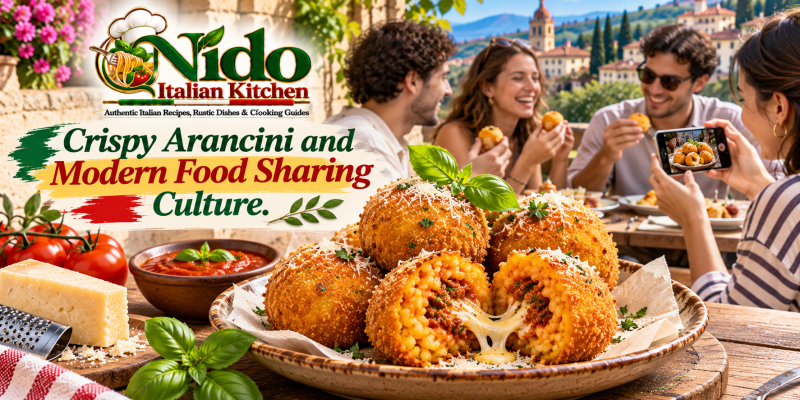
Crispy Arancini and Modern Food Sharing Culture – In contemporary dining environments, communal eating and small-plate sharing have transformed how people experience food. Today, diners increasingly favor interactive meal formats that encourage conversation and variety over rigid multi-course setups. Among classic Italian street foods, crispy Sicilian arancini fit seamlessly into this modern food sharing culture.
Crispy Arancini and Modern Food Sharing Culture
These golden, stuffed rice balls offer an ideal combination of crunchy outer crust, savory risotto filling, and melted cheese centers. In this educational culinary guide, we will analyze crispy arancini and their role in modern food sharing culture. By understanding their regional origins, technical assembly, and serving methods, you can incorporate these delicious bites into your hosting menu effortlessly.
The Historic Origins of Sicilian Arancini
Before becoming a staple of global street food menus, arancini developed through centuries of cultural exchange across Sicily.
1. Arab Influence and Golden Rice
During the tenth century, Arab rule in Sicily introduced key agricultural staples, including rice, saffron, and citrus fruits. Local cooks prepared saffron-scented rice, shaping it into small balls to make portable meals for field workers. The name arancini translates to “little oranges,” referencing the golden color and spherical shape of the fried rice balls.
2. Breadcrumb Coating and Frying Technique
Later during the rule of Frederick II, cooks developed a crunchy breadcrumb coating around the rice balls. This outer breading sealed in moisture, allowing the food to remain fresh during travel. Consequently, arancini became one of Europe’s earliest functional street food items.
Core Ingredients of Authentic Arancini
Crafting high-quality arancini requires building distinct flavor layers, starting with properly cooked rice.
1. Saffron-Infused Risotto Base
Authentic arancini rely on high-starch Italian rice varieties like Arborio or Carnaroli. Cooks prepare a firm risotto infused with saffron, butter, and grated Parmigiano-Reggiano cheese. The high starch content helps the cooked grains stick together naturally when cooled.
2. Traditional Fillings (Ripieno)
Classic Sicilian arancini feature two primary traditional fillings:
-
Ragù and Peas: A slow-cooked meat sauce made with minced beef or pork, green peas, and diced mozzarella.
-
Prosciutto and Bechamel: A creamy white sauce filling mixed with diced ham and gooey caciocavallo cheese.
Arancini in Modern Food Sharing Culture
The rise of tapas-style dining and social platters has elevated arancini into a favorite choice for modern gatherings.
1. Perfect Portion Control for Group Sharing
Individual arancini offer convenient single-serve portions that guests can pick up easily without needing formal table settings. Therefore, they fit naturally onto shared cocktail platters, buffet displays, and casual party boards.
2. Multisensory Texture Contrast
Modern food sharing focuses heavily on contrasting textures that excite the palate. Arancini deliver a dramatic sensory experience when bitten into. The crisp outer shell yields to warm, creamy risotto, followed by a gooey, melted cheese center.
3. Versatility for Modern Diets
In addition to classic meat ragù, contemporary chefs adapt arancini fillings for diverse dietary preferences. For instance, mushroom risotto, wild spinach with ricotta, or spicy arrabbiata fillings allow hosts to serve vegetarian-friendly options easily.
Technical Steps for Maximum Crispness
Achieving a perfectly golden, crispy crust without oily saturation requires strict technical control during frying.
Phase 1: Thorough Chilling of the Rice
Never attempt to shape arancini using warm risotto. Spread cooked risotto onto a flat baking sheet and chill it completely in the refrigerator. Cold starch firms up, making the rice easy to shape around the filling without crumbling.
Phase 2: Double Breading Method
Shape cold rice into balls or traditional Sicilian cones, stuffing a cube of mozzarella inside the middle. Pass each rice ball through a smooth flour-and-water batter before rolling it thoroughly in fine breadcrumbs. This thin batter coating seals the ball tightly, preventing cheese from leaking during frying.
Phase 3: Deep Frying at Optimal Temperature
Fry arancini in hot neutral oil maintained between 350 and 365 degrees Fahrenheit (175 to 185 degrees Celsius). Frying at this specific temperature browns the breadcrumbs rapidly while warming the internal cheese center. Drain fried arancini on paper towels immediately before serving.
Key Serving Principles for Shared Platters
-
Serving Temperature: Serve arancini hot so the internal cheese remains melted and stretchy.
-
Dipping Sauces: Pair arancini with warm marinara sauce or spicy garlic aioli for added moisture.
-
Garnish: Dust shared platters with freshly grated Parmigiano-Reggiano and chopped parsley.
Summary Feature Matrix
| Feature | Classic Sicilian Arancini | Modern Sharing Adaptation |
| Primary Shape | Large round ball or conical shape | Bite-sized mini spheres |
| Traditional Filling | Slow-cooked meat ragù or ham | Wild mushroom, spinach, or vegan cheese |
| Serving Style | Individual street snack wrapped in paper | Arranged on shared wooden party platters |
Conclusion
Understanding crispy arancini and modern food sharing culture highlights how traditional street food MPO GACOR adapts effortlessly to modern dining habits. By combining saffron risotto, savory fillings, and a crunchy breadcrumb crust, arancini offer an engaging, communal food experience. Incorporate these golden fried rice balls into your next social platter to offer guests an authentic taste of Italian culinary tradition.