
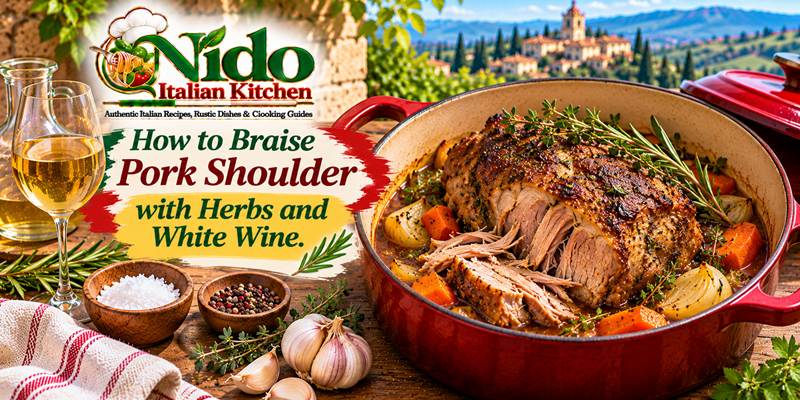
How to Braise Pork Shoulder with Herbs and White Wine – In classic Italian culinary tradition, braising represents one of the most effective methods for preparing tough cuts of meat. Known as brasato or stufato, slow cooking transforms inexpensive cuts into meltingly tender, flavorful dishes. While many red meat braises rely on heavy tomato sauces and dark red wines, using crisp dry white wine delivers a bright, complex flavor profile. Pairing pork shoulder with fresh Mediterranean herbs and white wine creates a harmonious main course (secondo) perfect for formal gatherings and family meals alike.
How to Braise Pork Shoulder with Herbs and White Wine
In this educational culinary guide, we will analyze how to braise pork shoulder with herbs and white wine. By understanding meat selection, searing mechanics, and liquid reduction, you can master slow-heat cooking in your own home kitchen.
The Science and Benefits of Slow Braising
Understanding the structural composition of pork shoulder explains why slow-cooking techniques yield exceptional culinary results.
1. Breaking Down Connective Tissue
Pork shoulder contains significant amounts of collagen and tough connective tissues. High-heat cooking causes these muscle fibers to contract tightly, resulting in dry, chewy meat. Conversely, slow braising maintains a steady liquid temperature around 200 degrees Fahrenheit (93 degrees Celsius). Over several hours, this gentle moist heat breaks down tough collagen into silky gelatin, giving the pork a tender, juicy mouthfeel.
2. The Role of White Wine Acidity
Dry white wine provides essential acidity that cuts through the rich, natural fat of pork shoulder. Furthermore, the natural acid in white wine tenderizes muscle fibers slowly during the braising process. As the alcohol evaporates under low heat, it leaves behind a subtle fruit aroma that enhances the savory meat juices naturally.
Selecting Essential High-Quality Ingredients
Achieving superior flavor requires balancing rich meat with fresh aromatics and proper wine selection.
1. Pork Shoulder Cut Selection
Select a well-marbled, bone-in pork shoulder roast weighing roughly three to four pounds. The central bone releases natural gelatin during long simmering, enriching the braising liquid significantly.
2. Herb Selection and Aromatics
Use a combination of fresh woody herbs that withstand long cooking times without turning bitter:
-
Fresh Rosemary: Supplies a piney, earthy scent that pairs robustly with pork.
-
Fresh Thyme: Offers subtle floral and herbal notes to round out the sauce.
-
Sage Leaves: Delivers a savory flavor that complements pork fat beautifully.
-
Garlic and Soffritto: A base of yellow onions, carrots, celery, and whole garlic cloves provides aromatic depth.
3. Dry White Wine Selection
Choose a crisp, dry white wine with medium acidity, such as Italian Pinot Grigio, Sauvignon Blanc, or Vermentino. Avoid using sweet cooking wines or heavily oaked Chardonnays, as heat concentrates sweetness and oak tannins unpleasantly.
Step-by-Step Cooking Technique for Braised Pork
Mastering this classic braise relies on thorough initial searing followed by patient, low-heat simmering.
Phase 1: Pre-Searing the Pork Shoulder
Pat the pork shoulder completely dry using paper towels to ensure a deep crust forms. Season all sides generously with coarse sea salt and cracked black pepper. Heat extra virgin olive oil inside a heavy Dutch oven over medium-high heat. Sear the pork shoulder for roughly three to four minutes per side until a rich golden brown crust develops. Transfer the seared roast onto a plate.
Phase 2: Sautéing Aromatics and Deglazing
Lower the stove flame to medium heat. Add your diced onions, carrots, celery, crushed garlic cloves, and fresh herb sprigs into the hot rendered pork fat. Sauté the aromatic vegetables for six to eight minutes until soft and fragrant. Next, pour in two cups of dry white wine to deglaze the pot, scraping up all seared bits stuck to the bottom.
Phase 3: The Slow Braising Process
Return the seared pork shoulder into the Dutch oven, adding chicken stock until the liquid reaches halfway up the side of the meat. Cover the pot tightly with a heavy lid and transfer it into a preheated oven set to 300 degrees Fahrenheit (150 degrees Celsius). Braise the pork undisturbed for three to three and a half hours until the meat yields effortlessly to a fork.
Phase 4: Sauce Reduction and Plating
Remove the tender pork from the Dutch oven and tent it loosely with foil. Strain the braising liquid through a fine mesh sieve into a small saucepan, discarding the spent herbs. Simmer the strained liquid over medium heat for ten minutes until it reduces into a glossy, rich pan sauce. Slice the pork and drizzle the warm white wine reduction over the meat before serving. From Rustic Kitchens to Modern Venues: The Architecture of Dining Spaces
Key Rules for Braising Success
-
Thorough Searing: Sear every side of the meat deeply to seal in rich caramel flavors.
-
Liquid Level Control: Keep liquid levels halfway up the meat so the top steams while the bottom simmers.
-
Low Oven Heat: Maintain a low oven temperature to ensure smooth collagen breakdown.
-
Rest Before Slicing: Let the braised pork rest for fifteen minutes so juices redistribute evenly.
Summary Technique Matrix
| Feature | High-Heat Roasting | Low-Heat White Wine Braise |
| Cooking Temperature | 400°F (200°C) dry heat | 300°F (150°C) moist heat |
| Cooking Duration | Rapid (1 to 1.5 hours) | Extended (3 to 3.5 hours) |
| Meat Texture | Firm outer slice with tight grain | Meltingly tender, fork-shredded texture |
| Sauce Quality | Minimal pan drippings | Concentrated, silky wine and herb reduction |
Conclusion
Learning how to braise pork shoulder with herbs and white wine highlights the beauty of classic Italian slow cooking. By searing high-quality meat, deglazing with dry white wine, and braising patiently alongside fresh herbs, you transform a rustic cut into a luxurious dish. Incorporate these precise braising steps into your cooking routine to serve a tender, restaurant-quality main course right at your own dinner table.