
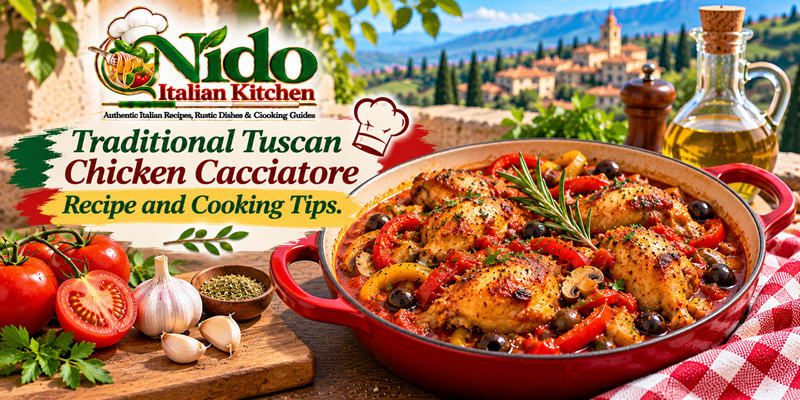
Traditional Tuscan Chicken Cacciatore Recipe and Cooking Tips – In the rich culinary tradition of Tuscany, central Italian home cooking relies on rustic braising methods that highlight high-quality local produce. Among classic Italian main courses (secondi), traditional Tuscan chicken cacciatore (Pollo alla Cacciatora) stands out as a beloved family comfort dish. The word cacciatore translates to “hunter style,” referencing historic meals that hunters prepared outdoors using wild herbs, bone-in poultry, and red wine.
Traditional Tuscan Chicken Cacciatore Recipe and Cooking Tips
Unlike modern fast-food variations, authentic Tuscan cacciatore features tender chicken simmered slowly in a savory, aromatic sauce. In this educational culinary guide, we will analyze the history, foundational ingredients, and technical steps of a traditional Tuscan chicken cacciatore. By incorporating these practical cooking tips, you can master a classic Italian braise in your domestic kitchen.
The Historic Origins of Hunter-Style Braising
Understanding the cultural roots of chicken cacciatore explains why specific ingredients define this classic recipe.
1. Rustic Forest Cuisine
Historically, Tuscan hunters gathered wild herbs, forest garlic, and tomatoes while spending long days outdoors. They braised local game or farm poultry inside heavy iron pots suspended over open campfires. As a result, the cooking process relied on low, steady heat to soften meat fibers naturally.
2. Tuscan Regional Characteristics
While coastal regions of Italy occasionally incorporate olives or capers into their braises, authentic inland Tuscan recipes remain focused on simplicity. Tuscan cooks rely heavily on fresh rosemary, garlic, bell peppers, and dry red Chianti wine to build a robust flavor foundation.
Essential Ingredients for Authentic Cacciatore
Achieving a rich, balanced Tuscan braise requires selecting high-quality bone-in poultry and fresh aromatic vegetables. Smashed Patatas Bravas with Garlic Aioli and Spicy Tomato Sauce
1. Bone-In, Skin-On Chicken Cutlets
Always choose bone-in, skin-on chicken thighs and drumsticks instead of boneless breasts. Bone marrow releases natural gelatin during long simmering, which naturally thickens the sauce. Furthermore, cooking meat on the bone keeps the chicken juicy and tender throughout the braising process.
2. The Tuscan Soffritto and Aromatics
Start your sauce with a coarsely diced soffritto of yellow onions, carrots, celery, and sweet bell peppers. Fresh rosemary sprigs and whole garlic cloves supply a earthy, herbal scent that pairs seamlessly with poultry.
3. Dry Red Wine and Whole Plum Tomatoes
Use a dry Tuscan red wine, such as Chianti or Sangiovese, to deglaze your pan. The wine adds rich acidity that balances the sweetness of hand-crushed Italian plum tomatoes.
Step-by-Step Cooking Technique for Tuscan Cacciatore
Mastering chicken cacciatore relies on proper browning techniques followed by patient, low-heat simmering.
Phase 1: Searing the Chicken Pieces
Pat your bone-in chicken thighs and drumsticks thoroughly dry using paper towels. Season both sides generously with sea salt and cracked black pepper. Heat extra virgin olive oil inside a heavy Dutch oven over medium-high heat. Sear the chicken pieces skin-side down for roughly six to eight minutes until the outer skin turns crisp and deeply golden. Transfer the seared chicken onto a warm plate.
Phase 2: Building the Aromatic Base
Lower the stove heat to medium and add your diced onions, carrots, celery, bell peppers, and garlic directly into the hot chicken fat. Sauté the aromatic vegetables slowly for eight minutes until they become tender and fragrant. Next, pour in dry red wine to deglaze the pot, scraping up all the savory browned bits stuck to the bottom.
Phase 3: The Slow Simmering Window
Add hand-crushed plum tomatoes and fresh rosemary sprigs into the pot. Return the seared chicken pieces back into the simmering sauce, ensuring the crispy skin faces upward. Lower the burner flame, cover the Dutch oven partially with a lid, and let the dish simmer gently for 45 minutes. The chicken is done when the meat pulls away from the bone easily.
Core Cooking Tips for Cacciatore Success
-
Pat Meat Dry: Remove surface moisture from the chicken before searing to build a deep crust.
-
Keep Bones Intact: Use bone-in cutlets to enrich the sauce with natural gelatin.
-
Deglaze Thoroughly: Scrape the bottom of your pot after adding red wine to incorporate all seared flavors.
-
Simmer Gently: Keep your burner at a low flame so the chicken stays tender without boiling aggressively.
Summary Feature Comparison
| Cooking Stage | Modern Quick Method | Traditional Tuscan Braise |
| Chicken Cut | Boneless, skinless chicken breast | Bone-in, skin-on thighs & drumsticks |
| Wine Base | White cooking wine or stock | Dry Tuscan red wine (Chianti) |
| Cooking Process | Quick pan-fry in sauce (15 mins) | Low-heat Dutch oven braise (45 mins) |
| Sauce Texture | Thin, watery tomato puree | Thick, rich reduction enriched by bone gelatin |
Conclusion
Mastering a traditional Tuscan chicken cacciatore recipe relies on selecting bone-in poultry, searing deeply, and braising patiently in red wine and aromatics. By building a solid soffritto base and simmering over low heat, you create a deeply comforting Italian main course. Apply these authentic Tuscan cooking tips at your next family dinner to serve a rustic, flavor-packed classic right at home.