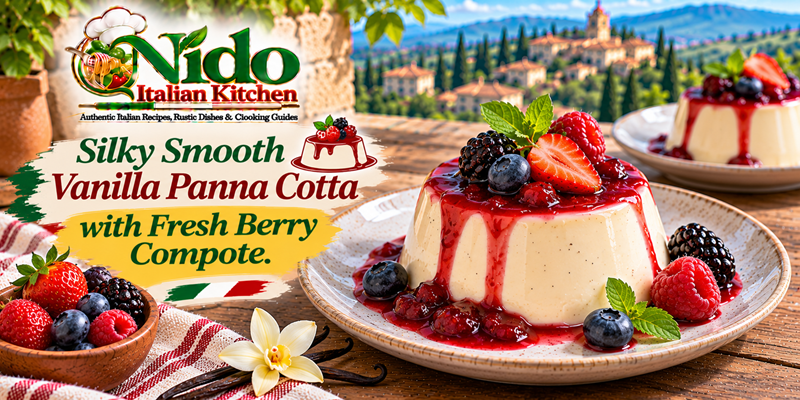
Silky Smooth Vanilla Panna Cotta with Fresh Berry Compote – In the refined world of Northern Italian pastry arts, simplicity often produces the most memorable culinary creations. Among classic Italian desserts (dolci), vanilla panna cotta stands out for its delicate wobble and velvety mouthfeel. Originating in the Piedmont region, the phrase panna cotta literally translates to “cooked cream.” Unlike baked custards that rely on eggs and oven heat, panna cotta sets gently in the refrigerator using gelatin. Pairing this rich, creamy base with a bright, tangy berry compote creates an ideal flavor balance.
Silky Smooth Vanilla Panna Cotta with Fresh Berry Compote
In this educational culinary guide, we will examine the history, essential ingredients, and technical assembly of a silky smooth vanilla panna cotta with fresh berry compote. By mastering gelatin hydration and temperature control, you can craft a restaurant-grade dessert at home.
The Piedmontese Origins of Panna Cotta
Understanding the historical background of panna cotta reveals why dairy quality defines this traditional dessert.
1. Alpine Dairy Heritage
Piedmont lies at the foot of the Western Alps, a region renowned for rich pastures and exceptional dairy production. Historically, rural cooks simmered surplus heavy cream with sugar and natural gelling agents to preserve the fresh milk harvest. Early recipes relied on boiled fish bones (colla di pesce) to thicken the liquid before modern commercial gelatin sheets became available.
2. Evolution into Fine Dining
During the twentieth century, Piedmontese chefs elevated panna cotta from a humble farmhouse dish into an international fine-dining staple. Today, pastry chefs infuse the warm cream with whole vanilla beans, espresso, or citrus zest, serving it alongside vibrant seasonal fruit sauces.
Selecting Essential High-Quality Ingredients
Because panna cotta contains only a few ingredients, selecting pure, fresh components remains crucial for superior taste and texture.
1. High-Fat Heavy Whipping Cream
Choose fresh heavy whipping cream containing at least 36 percent butterfat. High butterfat creates a luxurious, melt-in-your-mouth texture. You can also substitute up to one-quarter of the heavy cream with whole milk to achieve a slightly lighter consistency.
2. Whole Madagascar Vanilla Bean
Avoid artificial vanilla extract, which leaves a harsh, chemical aftertaste. Instead, use a plump whole Madagascar Bourbon vanilla bean. Splitting the pod lengthwise and scraping out the tiny black seeds infuses the cream with warm floral aromatics.
3. Unflavored Gelatin Sheets or Powder
Gelatin acts as the structural backbone of panna cotta. Using the exact ratio of gelatin ensures the cream holds its molded shape while retaining a delicate, creamy wobble on the spoon.
4. Mixed Fresh Berries for Compote
Combine fresh raspberries, blackberries, strawberries, and blueberries with granulated sugar and fresh lemon juice. Cooking the fruit briefly yields a glossy, tart compote that cuts through the richness of the sweet cream.
Step-by-Step Technique for Perfect Panna Cotta
Achieving a silky texture without rubbery lumps requires gentle heating and proper gelatin blooming.
Phase 1: Blooming the Gelatin
Pour three tablespoons of cold water into a small bowl. Sprinkle unflavored gelatin powder evenly over the water surface, or submerge gelatin sheets completely. Let the gelatin sit undisturbed for five to ten minutes until it absorbs the water and swells into a soft sponge.
Phase 2: Infusing the Sweet Cream
Pour heavy cream, whole milk, and granulated sugar into a heavy saucepan. Scrape the seeds from your vanilla bean into the pot, adding the empty pod as well for extra flavor. Warm the mixture over medium-low heat, stirring gently until the sugar dissolves completely. Remove the pan from the heat just as tiny bubbles appear around the edges. Never let the cream reach a rolling boil, as high heat ruins its fresh dairy flavor.
Phase 3: Dissolving Gelatin and Chilling
Remove the empty vanilla pod from the hot cream. Add your bloomed gelatin into the warm liquid and whisk gently until it dissolves completely without streaks. Pour the smooth mixture evenly into individual ceramic ramekins or metal molds. Cool the ramekins to room temperature, cover them with plastic wrap, and chill in the refrigerator for at least four hours.
Phase 4: Simmering the Fresh Berry Compote
Combine fresh mixed berries, sugar, and a splash of lemon juice in a small saucepan over medium heat. Simmer for eight minutes until the berries burst and release their natural juices. Remove from heat and let the compote cool completely before serving. Authentic Italian Tiramisu: The Classic Coffee-Soaked Layer Cake
Key Rules for Panna Cotta Success
-
Bloom in Cold Water: Always hydrate gelatin in cold water first so it dissolves smoothly without clumping.
-
Avoid Boiling Cream: Simmer dairy gently just below the boiling point to prevent scorching.
-
Chill Thoroughly: Refrigerate molds for at least four hours so the gelatin sets completely.
-
Unmold Carefully: Dip chilled ramekins into warm water for five seconds to release the panna cotta cleanly onto plates.
Summary Comparison of Texture Results
| Gelatin Ratio & Handling | Resulting Texture | Culinary Assessment |
| Proper Ratio & Gentle Heat | Silky, creamy, and lightly trembling | Authentic Piedmontese perfection |
| Excess Gelatin Added | Firm, bouncy, and overly rubbery | Unpleasant jelly-like mouthfeel |
| Insufficient Gelatin or Chilling | Runny, collapsing liquid pool | Fails to hold molded shape on plate |
Conclusion
Mastering a silky smooth vanilla panna cotta with fresh berry compote showcases the elegance of classic Northern Italian pastry arts. By blooming gelatin properly, infusing heavy cream with real vanilla beans, and balancing sweetness with tart berry compote, you achieve an effortless gourmet dessert. Serve this chilled treat at your next dinner party to delight guests with an authentic taste of Piedmontese culinary heritage.