
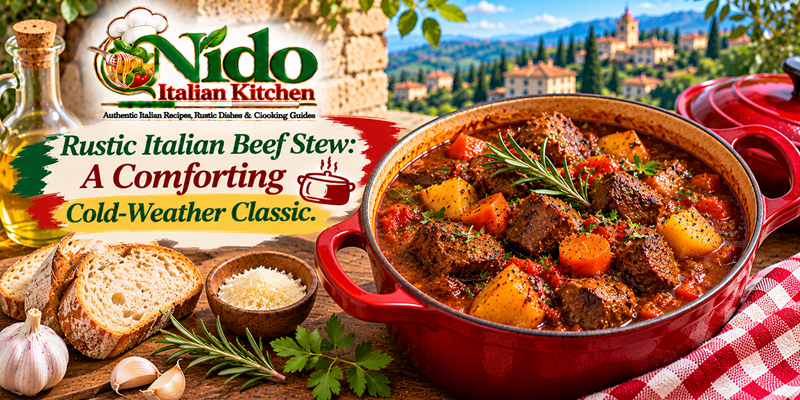
Rustic Italian Beef Stew: A Comforting Cold-Weather Classic – When winter temperatures drop, regional Italian home cooking shifts toward hearty, slow-cooked meals. Among classical main courses (secondi), traditional Italian beef stew—known natively as Spezzatino di Manzo—stands out as an essential winter masterpiece. Rooted in countryside traditions across Tuscany, Umbria, and Piedmont, this rustic dish transforms tough cuts of beef into tender morsels. By simmering high-quality meat alongside aromatic vegetables, herbs, and dry red wine, Italian cooks create a deeply comforting stew.
Rustic Italian Beef Stew: A Comforting Cold-Weather Classic
In this educational culinary guide, we will analyze the history, essential ingredients, and technical steps of a rustic Italian beef stew. By applying these traditional braising rules, you can master a classic winter meal right in your own kitchen.
The Cultural Origins of Italian Spezzatino
Understanding the historical background of Spezzatino reveals how rural Italian households maximized their resources through patient cooking techniques.
1. Countryside Economy and Peasant Tradition
Historically, peasant families (contadini) across central and northern Italy rarely cooked tender prime cuts of meat. Instead, they relied on tougher working muscles that required long, slow braising to break down. The word spezzatino originates from the verb spezzettare, which means “to cut into small pieces.” By cutting tough beef into small cubes, cooks allowed heat and moisture to penetrate the meat fibers evenly.
2. Regional Interpretations
Across Italy, different regions adapt beef stew according to local agriculture:
-
Tuscan Style: Often emphasizes dry red Chianti wine, fresh rosemary, and thick tomato paste.
-
Northern Style (Piedmont): Incorporates root vegetables like potatoes and carrots, sometimes finishing with heavy polenta.
-
Venetian Style: Frequently uses dark red wine, sweet onions, and bay leaves without heavy tomato purees.
Selecting Essential High-Quality Ingredients
Creating a rich Italian beef stew requires selecting high-collagen meat cuts alongside fresh aromatic produce.
1. Ideal Beef Cuts for Slow Braising
Always select well-marbled cuts rich in collagen and connective tissue, such as beef chuck roast, shank, or brisket. Avoid lean cuts like sirloin or round steak. Lean meats turn dry and stringy during long simmering, whereas chuck roast breaks down into meltingly tender, juicy bites.
2. The Soffritto Base and Fresh Aromatics
A traditional Italian stew begins with a finely diced soffritto—an equal balance of yellow onions, carrots, and celery sautéed in extra virgin olive oil. Fresh rosemary sprigs, thyme, and bay leaves supply an earthy, herbaceous profile that complements rich beef.
3. Dry Red Wine and Pureed Tomatoes
Use a dry, medium-bodied red wine like Sangiovese or Barbera to deglaze the pot. The natural acidity of red wine cuts through beef fat, while hand-crushed Italian plum tomatoes add rich color and body to the gravy. Slow-Roasted Osso Buco: Secret Steps for Tender Veal Shank
Step-by-Step Cooking Technique for Perfect Beef Stew
Mastering Spezzatino di Manzo relies on thorough initial searing followed by patient, low-heat simmering.
Phase 1: Pre-Searing the Beef Cubes
Pat your beef cubes completely dry using paper towels. Season the meat generously with sea salt and black pepper, then dust lightly with flour. Heat extra virgin olive oil inside a heavy Dutch oven over medium-high heat. Sear the beef in small batches for roughly three to four minutes per side until a deep golden crust forms. Avoid overcrowding the pan, as crowded meat steams rather than sears. Transfer seared beef onto a side plate.
Phase 2: Sautéing Aromatics and Deglazing
Lower the stovetop flame to medium heat. Add your diced onions, carrots, and celery directly into the pan drippings. Sauté the aromatic vegetables for six to eight minutes until soft and fragrant. Next, pour in one cup of dry red wine to deglaze the Dutch oven, scraping up all caramelized browned bits stuck to the bottom.
Phase 3: Low-Heat Slow Braising
Return the seared beef cubes back into the pot, adding crushed plum tomatoes and warm beef broth until the liquid covers the meat completely. Tuck in fresh rosemary, thyme, and bay leaves. Cover the pot with a tight-fitting lid, lower the flame, and let the stew simmer gently for two to two and a half hours. Add diced potatoes during the final forty minutes of cooking so they absorb flavor while retaining their structure.
Key Rules for Beef Stew Success
-
Pat Meat Dry: Remove surface moisture before searing to build a deep, caramelized crust.
-
Sear in Batches: Avoid crowding the Dutch oven so each meat cube browns thoroughly.
-
Low Simmer Heat: Keep the burner flame at a gentle simmer to dissolve muscle collagen slowly.
-
Rest Before Serving: Let the finished stew rest for fifteen minutes so flavors harmonize before plating.
Summary Comparison of Cooking Methods
| Cooking Phase | Fast Stovetop Boiling | Traditional Slow Braise |
| Cooking Temperature | Rapid boiling heat (212°F / 100°C) | Gentle low simmer (185°F to 200°F) |
| Cooking Duration | Rapid (under 45 minutes) | Extended (2 to 2.5 hours) |
| Beef Texture | Tough, chewy, and dry muscle fibers | Meltingly tender, fork-shredded bites |
| Sauce Quality | Thin, watery broth with separate fat | Rich, velvety gravy enriched by gelatin |
Conclusion
Understanding how to make a rustic Italian beef stew highlights the beauty of classic countryside cooking. By selecting collagen-rich beef chuck, searing deeply, and simmering patiently with red wine and aromatics, you transform humble ingredients into a luxurious meal. Serve your Spezzatino di Manzo hot over soft polenta or alongside crusty Italian bread to offer your guests an authentic, comforting winter dining experience.