
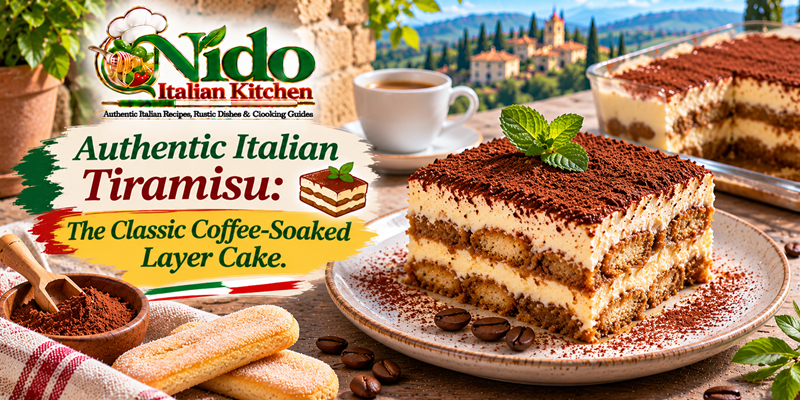
Authentic Italian Tiramisu: The Classic Coffee-Soaked Layer Cake – In the world of international pastry arts, few desserts enjoy the global acclaim of authentic Italian tiramisu. Native to Northern Italy, this famous coffee-soaked layer cake combines simple chilled components into a sophisticated dessert (dolce). The name tiramisu literally translates to “pick me up,” referencing the energizing combination of strong espresso coffee and rich egg custard.
Authentic Italian Tiramisu: The Classic Coffee-Soaked Layer Cake
Unlike baked European cakes, authentic tiramisu requires no oven time. Instead, it relies on chilling to set its delicate layers of mascarpone cream and ladyfinger biscuits. In this educational culinary guide, we will analyze the history, essential ingredients, and layer assembly of an authentic Italian tiramisu. By following these foundational pastry rules, you can create a flawless restaurant-quality dessert at home.
The Cultural Origins of Northern Italian Tiramisu
Understanding the historical background of tiramisu helps clarify why specific regional ingredients remain essential today.
1. The Venetian Heritage Debate
Culinary historians trace the origins of modern tiramisu to the Veneto region during the mid-twentieth century. Specifically, the town of Treviso claims the dish was invented at the famous restaurant Le Beccherie. Local pastry chefs designed a light, nutritious dessert to boost energy for patrons after long working days.
2. Evolution of the Modern Recipe
Historically, early versions used simple egg yolks whipped with sugar, layered alongside coffee-dipped biscuits. Later recipes incorporated rich mascarpone cheese and cocoa powder, creating the luxurious multi-layered cake enjoyed worldwide today.
Essential Ingredients for Authentic Tiramisu
Creating a traditional tiramisu requires strict adherence to authentic ingredients without low-quality substitutes.
1. Authentic Savoiardi (Italian Ladyfingers)
Always select dry, crisp Italian Savoiardi ladyfingers instead of soft, spongy cake fingers. Savoiardi biscuits feature a firm outer sugar crust and airy interior. Consequently, they absorb liquid espresso rapidly without collapsing or turning mushy.
2. Italian Mascarpone Cheese
Mascarpone acts as the primary dairy base for the velvety filling. This fresh Italian cream cheese offers a mild, buttery taste and high fat content. Avoid using generic cream cheese spreads, as their high salt levels ruin the dessert’s natural sweetness.
3. Fresh Farm Eggs and Granulated Sugar
Traditional tiramisu relies on fresh egg yolks whipped with sugar into a thick pale ribbon (zabaione base). Additionally, folding whipped egg whites or heavy cream into the mascarpone adds a light, airy structure.
4. Freshly Brewed Espresso and Dark Cocoa
Use strong, freshly brewed Italian espresso cooled to room temperature. Finish the assembled dessert with a thick dusting of unsweetened dark cocoa powder right before serving.
Step-by-Step Technique for Assembling Tiramisu
Mastering tiramisu relies on gentle dipping, precise cream folding, and adequate chilling time. Rustic Italian Beef Stew: A Comforting Cold-Weather Classic
Phase 1: Preparing the Coffee Dip
Brew two cups of strong dark espresso and pour the liquid into a wide, shallow bowl. Let the coffee cool completely. If desired, stir in a splash of traditional Marsala wine or dark rum to add warm aromatic notes.
Phase 2: Whipping the Mascarpone Cream
Whip fresh egg yolks with granulated sugar using a hand mixer until the mixture becomes pale and creamy. Add cold mascarpone cheese into the egg mixture gradually, beating on low speed until smooth. In a separate bowl, whip fresh egg whites to stiff peaks, then fold them gently into the mascarpone cream using a silicone spatula.
Phase 3: Quick Ladyfinger Dipping
Dip each Savoiardi ladyfinger into the cooled espresso for exactly one to two seconds per side. Avoid soaking the biscuits too long, as excess liquid will pool at the bottom of your dish.
Phase 4: Layering and Chilling
Arrange a single layer of coffee-soaked ladyfingers inside a rectangular ceramic baking dish. Spread half of the whipped mascarpone cream smoothly over the biscuits. Repeat the process with a second layer of ladyfingers, topping it with the remaining cream. Cover the dish with plastic wrap and chill in the refrigerator for at least six hours.
Phase 5: Cocoa Powder Finishing
Dust the top cream layer generously with dark cocoa powder using a fine mesh sifter just before slicing. Serving cold guarantees clean geometric layers on each plate.
Key Rules for Tiramisu Success
-
Use Dry Savoiardi: Choose crisp Italian ladyfingers to preserve structural cake integrity.
-
Rapid Dipping: Dip biscuits briefly to absorb espresso without over-saturating the base.
-
Cool Coffee First: Never dip ladyfingers into hot espresso, as heat melts mascarpone cream instantly.
-
Chilling Duration: Allow at least six hours of refrigeration so the layers set firmly.
Summary Ingredient Feature Comparison
| Component | Traditional Authentic Choice | Low-Quality Substitute |
| Biscuit Layer | Dry Italian Savoiardi ladyfingers | Soft American sponge cake strips |
| Cream Base | Italian Mascarpone cheese | Salted cream cheese or tub topping |
| Coffee Base | Freshly brewed dark espresso | Instant coffee granules in water |
| Top Finish | Unsweetened dark cocoa powder | Pre-sweetened milk chocolate flakes |
Conclusion
Mastering authentic Italian tiramisu highlights the art of combining simple chilled components into an iconic dessert. By using crisp Savoiardi ladyfingers, rich mascarpone cheese, strong dark espresso, and unsweetened cocoa powder, you achieve a perfect texture balance. Apply these precise assembly techniques at home to serve your guests an authentic, luxurious Italian classic.