
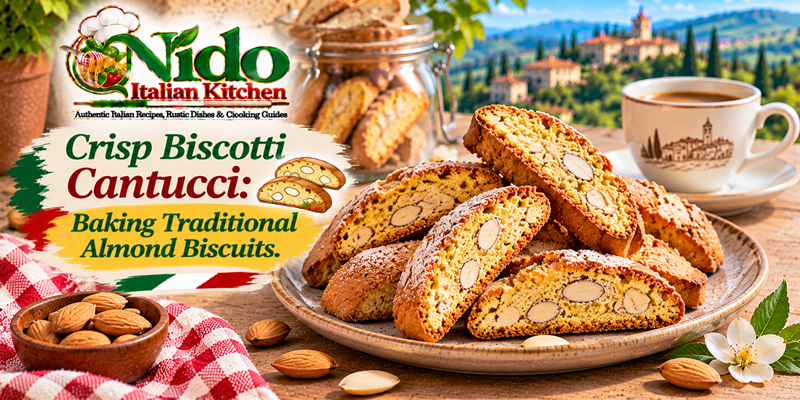
Crisp Biscotti Cantucci: Baking Traditional Almond Biscuits – In the celebrated baking traditions of Tuscany, few confections embody rustic elegance quite like Cantucci—known globally as Italian almond biscotti. Originating in the medieval city of Prato near Florence, these golden, twice-baked biscuits feature a remarkably firm crunch and toasted nutty aroma. The English word biscotti derives directly from the Latin term biscoctus, which means “twice-cooked.” Unlike soft, buttery Western cookies, authentic Tuscan Cantucci rely on dry baking techniques to achieve an extended shelf life and sturdy dipping structure.
Crisp Biscotti Cantucci: Baking Traditional Almond Biscuits
In this educational culinary guide, we will examine the history, essential ingredients, and technical steps for baking crisp biscotti cantucci. By mastering dough hydration, log shaping, and double-baking temperatures, you can create authentic Tuscan almond biscuits in your own kitchen.
The Tuscan Heritage of Prato’s Iconic Biscuits
Understanding the historical background of Cantucci explains why specific ingredients and baking methods remain mandatory today.
1. Medieval Origins and Preservation
During the Middle Ages, travelers, soldiers, and merchants required durable baked goods that could survive long journeys without spoiling. Bakers in Prato developed dry, twice-baked almond loaves that resisted mold for months. In the nineteenth century, local pastry chef Antonio Mattei refined the recipe into the classic version recognized across Italy today.
2. The Classic Vin Santo Pairing
Because authentic Cantucci contain zero butter or oil, they possess an exceptionally hard, dry texture when eaten plain. Traditionally, Italians serve Cantucci at the end of a meal alongside a small glass of sweet Tuscan dessert wine known as Vin Santo. Dipping the crisp biscuit into the sweet wine softens the crumb instantly while releasing warm almond aromatics.
Sourcing Essential High-Quality Ingredients
Crafting traditional Tuscan Cantucci requires respecting strict ingredient ratios without adding unnecessary fats.
1. Whole Unblanched Almonds
Always select whole, skin-on raw almonds rather than sliced or blanched nuts. Keeping the brown almond skins intact provides a rustic visual contrast against the golden biscuit dough while adding subtle earthy bitterness.
2. All-Purpose Flour and Granulated Sugar
Traditional recipes combine standard wheat flour with granulated white sugar and a touch of honey. Sugar provides sweetness while helping the outer crust caramelize into a crisp, golden-brown shell during baking.
3. Fresh Farm Eggs and Citrus Aromatics
Because authentic Cantucci exclude butter and oil, whole farm eggs act as the sole liquid binder in the dough. Enhance the batter with freshly grated orange zest, lemon zest, and pure vanilla extract for bright floral notes.
Step-by-Step Technique for Twice-Baked Biscotti Cantucci
Mastering Cantucci relies on executing two distinct baking stages separated by a brief cooling and slicing window. Gelato vs. Ice Cream: What Makes Italian Gelato Unique?
Phase 1: Mixing the Stiff Dough
Whisk fresh eggs, granulated sugar, honey, orange zest, and vanilla extract in a large bowl until smooth and pale. In a separate bowl, sift together flour, baking powder, and a pinch of fine sea salt. Gradually fold the dry flour mixture into the wet egg base until a cohesive dough forms. Finally, knead whole unblanched almonds into the dough until distributed evenly.
Phase 2: Shaping and First Baking
Divide the sticky dough into two equal portions on a lightly floured surface. Shape each portion into a flat, narrow log roughly ten inches long and two inches wide. Transfer the logs onto a parchment-lined baking sheet, leaving ample space between them. Bake in a preheated oven at 350 degrees Fahrenheit (175 degrees Celsius) for twenty-five minutes until firm and lightly golden.
Phase 3: Precision Diagonal Slicing
Remove the baked logs from the oven and let them cool on the tray for exactly fifteen minutes. Cooling slightly firms up the crumb so the logs do not crumble under the knife. Using a sharp serrated bread knife, slice each log diagonally into uniform three-quarter-inch thick biscuits.
Phase 4: Second Baking for Maximum Crispness
Arrange the sliced biscuits cut-side down in a single layer across your baking sheet. Return the tray to the oven and bake at a reduced temperature of 300 degrees Fahrenheit (150 degrees Celsius) for ten minutes per side. This second gentle bake removes residual moisture, creating the signature crisp snap of authentic Cantucci.
Key Rules for Biscotti Success
-
Omit Butter and Oil: Avoid adding fats to preserve the authentic dry, crunchy Tuscan texture.
-
Cool Logs Briefly: Wait fifteen minutes before slicing so warm dough cuts cleanly without breaking.
-
Use a Serrated Knife: Saw gently through whole almonds using a serrated blade to prevent crushing the biscuits.
-
Bake Twice Low and Slow: Dry the sliced biscuits thoroughly at lower heat for lasting crispness.
Summary Comparison of Baking Methods
Conclusion
Mastering crisp biscotti cantucci demonstrates how simple ingredients and patient double-baking techniques yield timeless culinary results. By combining whole almonds, fresh eggs, and aromatic citrus zest without added fats, you create a durable, flavorful Italian biscuit. Serve your homemade Cantucci alongside sweet dessert wine or strong espresso to offer guests an authentic taste of Tuscan baking heritage.