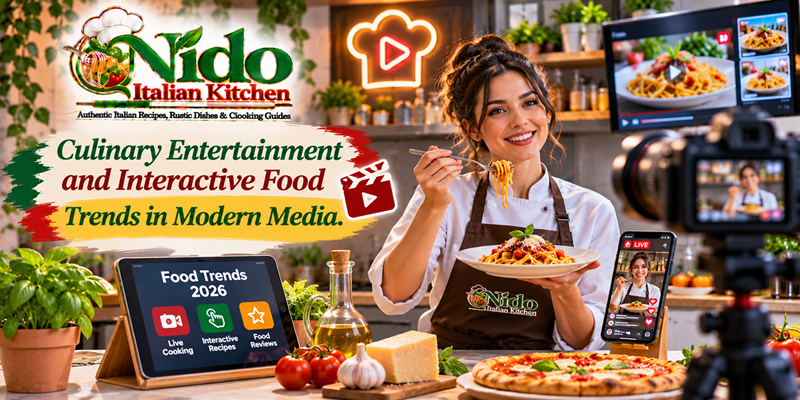
Culinary Entertainment and Interactive Food Trends in Modern Media – Over the past two decades, the relationship between food and digital media has undergone a remarkable transformation. Historically, cooking instruction existed primarily inside printed recipe books or structured afternoon television broadcasts. However, the rise of streaming platforms and social media has turned cooking into a dynamic global spectacle.
Culinary Entertainment and Interactive Food Trends in Modern Media
Today, culinary entertainment and interactive food trends in modern media shape how audiences discover ingredients, learn techniques, and experience gastronomy. In this educational article, we will examine the evolution of culinary entertainment and interactive food trends in modern media. By analyzing digital formats, viewer participation, and sensory storytelling, we can understand how modern media influences contemporary dining habits.
The Evolution from Instructional Television to Digital Spectacle
Understanding how food media evolved explains why culinary content now captures massive global audiences.
1. Early Instructional Cooking Broadcasts
During the mid-twentieth century, pioneering television chefs introduced audiences to international cuisines from simple studio kitchens. These early shows focused heavily on step-by-step education, clear measurements, and calm demonstrations. Viewers watched passively while taking handwritten notes on paper cards.
2. High-Stakes Competitive Reality Formats
By the early twenty-first century, television networks shifted toward dramatic culinary competitions. High-pressure cooking battles, strict time limits, and celebrity judge panels turned kitchen work into thrilling entertainment. Consequently, food media gained mainstream popularity far beyond dedicated home cooks.
Interactive Food Trends in Modern Social Media
Today, short-form video platforms and live streaming networks have replaced one-way broadcasts with two-way interactive experiences.
1. Viral Recipe Challenges and Recreations
Modern social media encourages viewers to recreate trending dishes immediately in their own kitchens. From baked feta pasta to whipped coffee, viral food trends spread rapidly across global communities. Viewers record their own cooking attempts, tag original creators, and share honest taste reviews in real time.
2. Live-Streamed Interactive Cooking Classes
Digital platforms now allow professional chefs to host live, interactive cooking sessions from their home or restaurant kitchens. Viewers cook alongside the chef simultaneously while asking questions through live chat feeds. As a result, home cooks receive instant troubleshooting advice on knife skills, seasoning balance, and heat control.
3. Sensory ASMR and Visual Gastronomy
Modern food creators rely heavily on high-definition close-up cinematography and crisp audio recording. Capturing the sizzle of olive oil, the crunch of fresh bread crusts, and smooth sauce pours triggers strong sensory responses. This visual storytelling style engages viewers emotionally without requiring spoken narration.
How Modern Media Influences Dining and Restaurant Culture
The impact of digital culinary entertainment extends directly into commercial restaurant dining rooms and grocery shopping habits.
1. Tableside Theater and Shareable Aesthetics
Modern restaurants frequently design signature dishes specifically for visual appeal on digital platforms QQ889 SLOT GACOR. Tableside pasta tossing inside hollowed cheese wheels, smoking cocktail domes, and dramatic dessert platings encourage diners to record and share their meals online.
2. Global Appreciation for Authentic Regional Cuisines
Digital documentaries and travel food series introduce viewers to hyper-regional culinary traditions around the globe. Rather than settling for generic adaptations, modern diners actively seek out authentic regional specialties, traditional fermentation methods, and heirloom ingredients.
Core Drivers of Modern Food Media Success
-
Active Audience Participation: Viewers vote on recipe outcomes, submit ingredient challenges, and share personal recreations.
-
Bite-Sized Educational Formats: Short, fast-paced videos teach complex culinary techniques in under sixty seconds.
-
Authentic Storytelling: Audiences connect deeply with the cultural history and personal passion behind traditional recipes.
-
Accessible Global Access: Anyone with a smartphone can learn professional cooking skills free of charge.
Summary Comparison of Culinary Media Eras
| Feature | Traditional Cooking Broadcasts | Modern Interactive Food Media |
| Audience Role | Passive viewer taking notes | Active participant recreating and commenting |
| Content Format | Long-form 30-to-60-minute episodes | Short-form vertical videos and live streams |
| Production Style | Static studio camera angles | High-definition macro shots and sensory audio |
| Cultural Impact | Introduced basic domestic cooking | Drives viral global food trends and dining habits |
Conclusion
Exploring culinary entertainment and interactive food trends in modern media reveals how technology transforms our connection to food. From passive television broadcasts to interactive live streams and viral recipe challenges, modern platforms make gastronomy more accessible and engaging than ever before. By blending visual storytelling with active community participation, digital media continues to inspire home cooks and celebrate culinary heritage worldwide.