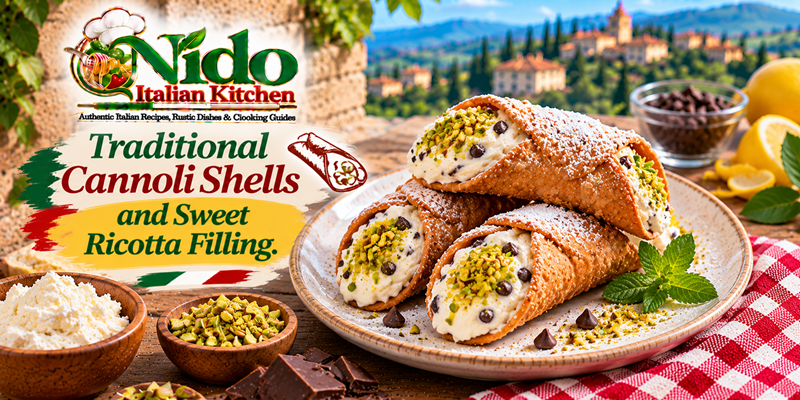
Traditional Cannoli Shells and Sweet Ricotta Filling – In the rich tapestry of Southern Italian pastry arts, few confections command as much admiration as the Sicilian cannolo. Originating on the sun-drenched island of Sicily, this iconic dessert pairs a crisp, blistered pastry tube with a smooth, sweet cheese center. The name cannolo derives from the Latin word canna, meaning “small tube,” referencing the river reeds cooks historically used to shape the dough.
Traditional Cannoli Shells and Sweet Ricotta Filling
Crafting traditional cannoli shells and sweet ricotta filling requires balancing crunchy pastry textures against rich dairy creaminess. In this educational culinary guide, we will examine the history, essential ingredients, and technical assembly of traditional cannoli shells and sweet ricotta filling. By mastering dough elasticity, frying temperature, and ricotta drainage, you can achieve authentic Sicilian pastry results at home.
The Historical Origins of Sicilian Cannoli
Understanding the cultural heritage of cannoli explains why specific ingredients define this beloved regional dessert (dolce). Culinary Entertainment and Interactive Food Trends in Modern Media
1. Arab-Norman Culinary Exchange
Culinary historians trace the birth of cannoli to the Arab emirate of Sicily during the tenth century, particularly around the city of Caltanissetta. Arab pastry makers introduced cane sugar, almonds, and candied fruits to Sicilian kitchens. Local convent nuns later adapted these ingredients, wrapping fried pastry dough around sweet sheep’s milk cheese to celebrate Carnival season.
2. From Seasonal Treat to Global Icon
Originally enjoyed exclusively during pre-Lenten festivities, cannoli gradually became a year-round staple across Sicilian pasticcerie. Today, Italian bakeries worldwide serve cannoli as an emblem of traditional Southern Italian craftsmanship.
Sourcing Essential High-Quality Ingredients
Creating authentic cannoli relies on selecting genuine Sicilian ingredients rather than modern mass-produced shortcuts.
1. Pastry Dough and Marsala Wine
Traditional cannoli shells rely on high-protein bread flour or Italian Type 00 flour, granulated sugar, cold lard or butter, and sweet Marsala wine. Adding Marsala wine and a splash of white wine vinegar creates small air bubbles during frying. Consequently, the pastry develops its signature crisp, blistered surface.
2. Authentic Sheep’s Milk Ricotta (Ricotta di Pecora)
In Sicily, authentic cannoli filling uses fresh sheep’s milk ricotta rather than cow’s milk varieties. Sheep’s milk ricotta offers a richer, slightly tangy flavor and a smoother, denser texture. If sheep’s milk ricotta is unavailable, select whole-milk cow ricotta and drain it thoroughly before mixing.
3. Traditional Flavor Accents
Enhance the sweet ricotta cream with confectioners’ sugar, ground cinnamon, orange blossom water, and chopped dark chocolate or candied orange peel. Finish the filled ends with crushed green Sicilian pistachios from Bronte for vibrant color and crunch.
Step-by-Step Technique for Cannoli Shells and Filling
Mastering cannoli requires separating the preparation into three clear stages: frying the shells, draining the cheese, and filling right before serving.
Phase 1: Kneading and Rolling the Dough
Combine flour, sugar, cocoa powder, and a pinch of salt in a mixing bowl. Cut cold lard or butter into the flour until the mixture resembles coarse crumbs. Stir in Marsala wine and egg yolk until a firm, smooth dough forms. Wrap the dough tightly and let it rest for one hour so the gluten relaxes. Roll the rested dough thinly to a thickness of one-sixteenth of an inch, then cut out four-inch ovals.
Phase 2: Shaping and Deep-Frying Shells
Wrap each oval dough piece around a stainless-steel cannoli tube, sealing the overlapping edge with a dab of egg white. Fry the wrapped tubes in hot oil maintained at 375 degrees Fahrenheit (190 degrees Celsius) for roughly two minutes until deep golden brown and blistered. Lift the tubes out carefully, slide off the crisp shells, and cool them on a wire rack.
Phase 3: Draining and Whipping the Ricotta Filling
Line a fine-mesh strainer with cheesecloth and place your fresh ricotta inside. Set the strainer over a bowl in the refrigerator overnight so excess whey drains away completely. Transfer the dry ricotta into a clean bowl, fold in confectioners’ sugar and cinnamon, and pass the mixture through a fine sieve for a silky texture. Fold in mini dark chocolate chips gently.
Phase 4: Last-Minute Piping and Garnishing
Transfer the sweet ricotta cream into a pastry bag fitted with a wide round tip. Pipe the filling into both ends of the cooled cannoli shells just minutes before serving. Dip the exposed cream ends into chopped pistachios and dust the shells lightly with powdered sugar.
Key Rules for Cannoli Success
-
Roll Dough Thinly: Roll pastry sheets paper-thin so the fried shells remain light and crisp rather than tough.
-
Drain Ricotta Overnight: Remove all excess liquid from ricotta so the filling stays thick and creamy.
-
Fill Before Serving: Always pipe the filling right before eating to prevent the crisp shells from turning soggy.
-
Control Oil Heat: Maintain steady frying heat so the pastry blisters immediately without absorbing excess oil.
Summary Comparison of Cannoli Preparation Practices
| Component | Authentic Sicilian Standard | Common Pastry Mistake |
| Shell Leavening | Marsala wine & vinegar reactions | Baking powder or heavy yeast |
| Ricotta Base | Overnight-drained sheep’s milk ricotta | Undrained, watery commercial ricotta |
| Filling Timing | Piped immediately prior to serving | Filled hours early and stored in fridge |
| End Garnish | Crushed Bronte pistachios & candied peel | Artificial green sprinkles or syrups |
Conclusion
Mastering traditional cannoli shells and sweet ricotta filling showcases the precision and artistry of Sicilian pastry tradition. By rolling Marsala-infused dough thinly, frying until crisp, draining fresh ricotta thoroughly, and filling at the final moment, you achieve a balanced contrast of textures. Serve these golden pastries alongside strong Italian espresso to delight guests with an unforgettable taste of Sicily.